Vinyl flooring is easy to live with, but it is not indestructible, and the way you clean vinyl floor surfaces makes a big difference to how long they last. Too much water, the wrong chemical or a scouring pad can dull the wear layer, lift edges or leave permanent marks. This guide explains the daily and weekly routine, which cleaning solutions are safe, how to handle common stains and what damages vinyl, whether you have sheet vinyl, vinyl strip flooring or luxury vinyl tiles and planks.
Vinyl is a familiar finish in Singapore homes. In many newer HDB flats it comes as part of the original fit-out: for example, HDB’s information on the May 2022 BTO exercise lists vinyl strip flooring for the bedrooms of 3-room and larger flats under its flooring option. Many owners also lay vinyl planks over existing tiles during renovation, because they are quiet, warm underfoot and quick to install.
Whatever type you have, the first rule is the same: keep the manufacturer’s or installer’s care instructions, and follow them over any general advice, including ours. Products differ, and some warranties depend on using approved cleaning methods.
Know your vinyl floor
Most residential vinyl has a printed design layer protected by a clear wear layer on top. That wear layer is what you are cleaning, and what you need to protect. Once it is scratched through or dulled, it cannot be polished back the way a stone floor can.
- Sheet vinyl comes in large rolls with few seams. It is fairly water-resistant across its surface, but water can still get under edges.
- Vinyl strip flooring and glue-down planks are stuck to the floor with adhesive. Standing water at the seams can weaken that adhesive over time.
- Click-lock luxury vinyl planks and tiles float over the existing floor. The surface usually resists water, but liquid that seeps through the joints can be trapped underneath, where it dries slowly in humid weather.
All three respond well to the same gentle approach: remove grit, damp mop rather than wet mop, and avoid harsh chemicals, abrasives and heat.
How to clean a vinyl floor: daily and weekly care
Every day or two
Grit is vinyl’s biggest enemy. Sand and fine dust carried in on shoes or blown in through windows act like sandpaper under feet and chair legs, slowly dulling the wear layer.
- Sweep with a soft broom or use a dry microfibre mop.
- Vacuum on the hard floor setting. Switch off the rotating beater brush if your vacuum has one, as stiff bristles can scuff some vinyl finishes.
- Wipe spills straight away with a damp cloth, then dry the spot.
Once a week
- Remove loose dirt first. Sweep or vacuum thoroughly. Mopping over grit grinds it into the surface.
- Prepare your solution. Use a cleaner labelled as suitable for vinyl, diluted exactly as the label says, or a few drops of mild dish soap in a bucket of warm water.
- Wring the mop well. A flat microfibre mop that is damp, not dripping, is ideal. You want a thin film of moisture that dries within a minute or two.
- Mop in sections, following the direction of the planks where there are any, so you do not push water into the joints.
- Rinse if needed. If your solution leaves a film, go over the floor again with a mop dampened in clean water.
- Dry and ventilate. Open windows or run a fan so the floor dries quickly.
Choosing a vinyl floor cleaning solution
The safest vinyl floor cleaning solution is usually the simplest. A pH-neutral floor cleaner made for vinyl, or a small amount of mild dish soap in warm water, cleans everyday dirt without stripping the wear layer or leaving residue.
Some things to avoid:
- Too much soap. Concentrated cleaner leaves a sticky film that attracts dirt and makes the floor look dull. More is not better.
- Abrasive powders and creams. These scratch the wear layer.
- Harsh solvents such as acetone, paint thinner or turpentine, which can soften or discolour vinyl.
- Undiluted bleach and ammonia-based cleaners, which many manufacturers warn against because they can damage or discolour the surface over time.
- Wax, polish and “mop and shine” products, unless the manufacturer specifically recommends one. Many modern vinyl floors have a factory finish that does not need waxing, and polish can build up into a cloudy, slippery layer.
- Acidic home remedies, such as strong vinegar solutions, used routinely. Some manufacturers advise against acidic cleaners, so check your care guide before using them.
Safety first
Never mix cleaning products. In particular, bleach must never be mixed with ammonia or with acids such as vinegar, because the combination can release harmful gases. Use one product at a time and rinse between them. Keep the room ventilated while you clean; the National Environment Agency’s guidelines for cleaning homes recommend letting fresh air in during and after cleaning. Always test any new product on a hidden spot, such as inside a wardrobe or under the bed, before using it on the whole floor.
A damp vinyl floor can be slippery. Keep children and elderly family members off it until it is dry, wear non-slip footwear while you mop, and wipe up drips as you go.
How to remove common stains from vinyl
Always start with the gentlest method and test anything stronger in a hidden corner first.
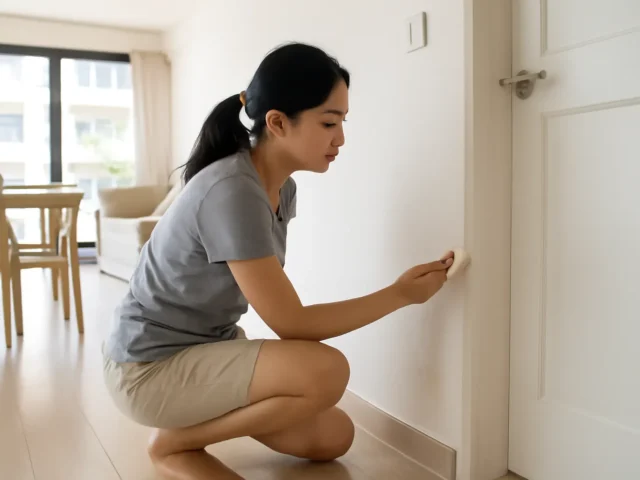
- Black scuff marks from shoes or furniture. Rub gently with a soft cloth and a little dish soap solution. A clean, soft eraser or a dry tennis ball rubbed over the mark often lifts scuffs without chemicals. Our guide to removing scuff marks covers walls and doors too.
- Grease and cooking oil. Wipe with warm water and a few drops of dish soap, then rinse and dry. Kitchens with vinyl benefit from quick daily wipes near the stove.
- Ink, marker and crayon. Dab with a cloth lightly moistened with rubbing alcohol, then wipe with water and dry. Test first, and ventilate the room, because alcohol is flammable and should be kept away from heat sources.
- Food and drink stains such as curry, coffee or juice. Wipe promptly. A paste of baking soda and water on a soft cloth can lift stubborn marks with gentle rubbing, followed by a rinse.
- Sticky residue from tape or labels. After renovation, protective tape often leaves marks. Our guide to removing sticker residue explains gentle methods, but avoid strong solvents on vinyl and test any oil-based method first, as it can leave the floor slippery until washed off.
- Nail polish. Do not use acetone-based remover on vinyl. Let small drops dry and lift them carefully with a plastic card, then clean the spot.
What damages vinyl flooring
Knowing what harms vinyl is as useful as knowing how to clean it.
- Standing water. Puddles from wet mops, leaking plant pots or bathroom drips can seep into seams, weakening adhesive or getting trapped under floating floors. Dry spills promptly.
- Steam mops. Many vinyl manufacturers advise against steam cleaning, because heat and pressurised moisture can weaken adhesives, cause planks to lift or warp, and dull the finish. Check your care guide before using one.
- Heavy furniture without protection. Fit felt pads to chair and table legs and use wide, non-staining coasters under heavy items. Lift furniture when moving it rather than dragging it.
- Rubber-backed mats. Some vinyl manufacturers warn that rubber or latex backing can react with vinyl and leave yellow stains. Choose mats that your flooring supplier says are compatible.
- Strong sunlight. Long hours of direct sun can fade vinyl and, on some products, cause expansion. Use curtains or blinds on west-facing windows.
- Sharp objects and grit. High heels, pet claws and unswept sand all leave scratches. A doormat at each entrance traps much of the grit before it reaches the floor.
- Abrasive tools. Steel wool, scouring pads and stiff brushes cut into the wear layer.
Vinyl floors after renovation or a move
A newly laid floor in a renovated flat often sits under a layer of fine construction dust, protective film and tape. Dust from cutting, sanding and drilling is especially abrasive, so remove it with a vacuum and dry microfibre before any damp mopping, and change your mop pads frequently. Wheeling heavy furniture across the floor before the dust is gone is one of the quickest ways to scratch a brand-new floor.
This is exactly the kind of stage where families book post-renovation cleaning, or move-in and move-out cleaning when changing homes. Let the cleaners know the floor is vinyl so they use suitable methods.
Related guides: How to Get Rid of Lizards at Home Humanely, and Keep Them Out and Termites in Singapore Homes: Signs, Safe Next Steps and Prevention.
Frequently Asked Questions
What is the best way to clean vinyl floor tiles and planks?
Sweep or vacuum first to remove grit, then damp mop with a well-wrung microfibre mop and either a cleaner labelled as suitable for vinyl or a few drops of mild dish soap in warm water. Mop along the planks, avoid leaving standing water, and let the floor dry quickly with good air flow. Follow your manufacturer’s care guide where it differs.
Can I use a steam mop on vinyl flooring?
Many vinyl manufacturers advise against steam mops, because the heat and moisture can weaken adhesives, cause planks to lift or warp and dull the finish. Check your flooring’s care guide before using one. A damp microfibre mop with a mild cleaner is the safer choice for routine cleaning.
Is bleach safe for vinyl floors?
Undiluted bleach can discolour vinyl, and many manufacturers advise against bleach and ammonia-based cleaners. If you need to disinfect, follow both the product label and your flooring care guide, ventilate the room, rinse afterwards and never mix bleach with ammonia or acids such as vinegar, which can release harmful gases.
How do I remove scratches from a vinyl floor?
Light surface scuffs can often be rubbed out with a soft cloth or eraser, but true scratches through the wear layer cannot be polished away. Some manufacturers sell repair kits for minor damage. For deep scratches on click-lock or glue-down planks, the damaged plank can sometimes be replaced, so keep a few spares from your installation.
Conclusion
Vinyl rewards a light touch. Remove grit regularly, damp mop with a mild, pH-neutral solution, dry spills promptly and keep abrasives, solvents, steam and standing water away from it. Protect it from furniture legs, rubber-backed mats and strong sun, and it should keep its looks for years.
If keeping on top of floors along with everything else is the hard part, a part-time helper can keep the weekly routine going.
Clean floors make the whole home feel fresher. Prefer to hand it over? Our regular home cleaning covers routine upkeep, and a deep clean goes further. Ask us for a quote.
The Femme5 Team
Home cleaning team, Femme5 Agency
Femme5 provides part-time home cleaning, deep cleaning and post-renovation cleaning for HDB flats, condominiums and landed homes across Singapore.