Knowing how to remove sticker residue properly saves a lot of scrubbing, and it saves surfaces too. The tacky film left behind by price labels, protective tape, children’s stickers and renovation masking tape looks harmless, but attack it with the wrong tool and you can scratch glass, lift paint or cloud plastic. This guide walks through what actually works on glass, tiles, wood, plastic and painted walls, and what to avoid on each.
We see a lot of adhesive marks in our cleaning work, especially in homes that have just been renovated or are changing hands. Contractors tape over window frames, floors and cabinet doors to protect them, and the tape often stays on for weeks. In Singapore’s heat, and especially on windows that catch the afternoon sun, that adhesive softens, spreads and then bakes on.
The good news is that most residue comes off with things already in your kitchen: warm water, dish soap, cooking oil and a little patience. Stronger solvents have their place, but they are the last step, not the first.
Why sticker and tape residue is so stubborn
Most stickers and tapes use a pressure-sensitive adhesive. It is designed to stay soft and grip whatever it touches, which is why it smears rather than flakes when you rub it. When you peel a label, the backing comes away but part of the adhesive layer stays behind, bonded to the surface.
Heat and time make it worse. Adhesive left in a warm room or in direct sun gradually changes texture, becoming either gummy and stringy or hard and yellowed. That is why a sticker peeled the day it was applied often leaves nothing, while tape left on a sunny window frame for a month can leave a brown, crusty line.
What you need before you start
- A hair dryer on a warm, low setting, to soften adhesive before peeling.
- Cooking oil, such as vegetable or canola oil, which breaks down many adhesives without harming glass or glazed tiles.
- Warm water and dish soap, to remove both the residue and any oil afterwards.
- Rubbing alcohol (isopropyl alcohol), for residue that oil does not shift.
- A plastic scraper or an old plastic card, which lifts softened adhesive without scratching most surfaces.
- A new single-edge razor scraper, for plain glass only.
- Gloves, if you are using any solvent.
Safety first
Rubbing alcohol and other solvents are flammable, so use them with the windows open and keep them well away from the stove, candles and joss sticks. Switch off and unplug the hair dryer before you apply any solvent, and do not use heat on a spot that is still wet with alcohol. The Singapore Civil Defence Force’s home emergency preparedness booklet advises keeping flammable liquids far from heat sources. Never mix cleaning products, and in particular never mix bleach with ammonia or with acids, because the combination can release harmful gases. Bleach does nothing for adhesive anyway. Always test any oil or solvent on a hidden spot first and wait a few minutes to check for dulling, softening or discolouration. Keep razor blades covered between uses and out of children’s reach.
How to remove sticker residue, step by step
This is the general method we start with on almost any hard surface. Adjust it using the surface-specific notes further down.
- Peel what you can, slowly. Lift a corner with a fingernail or plastic card and pull the label back on itself at a low angle, close to the surface, rather than straight up. Slow, steady peeling leaves far less adhesive behind.
- Warm stubborn labels first. Hold a hair dryer on a low setting a short distance away for 30 seconds or so, then try peeling again. Warm adhesive lets go more cleanly.
- Soften the residue with oil. Dab a little cooking oil onto what remains and leave it for five to ten minutes. You will see the edges start to loosen.
- Lift it off. Push the softened residue off with a plastic scraper or card, working in one direction, then wipe with a cloth.
- Switch to alcohol if needed. For residue that survives the oil, dampen a cloth with rubbing alcohol and rub in small circles. Reapply rather than pressing hard.
- Wash the area. Clean with warm water and a drop of dish soap to remove the oil and any dissolved adhesive, otherwise the spot will attract dust.
- Dry and buff. Finish with a dry microfibre cloth and check the spot in good light.
Removing residue surface by surface
Glass and mirrors
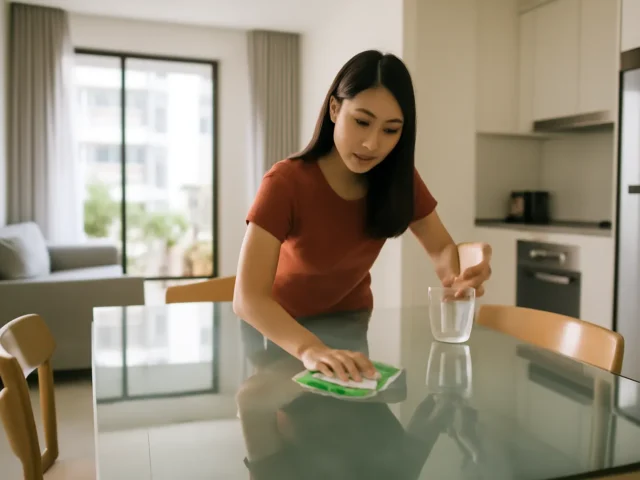
Plain glass is the most forgiving surface. Oil, alcohol and a plastic scraper will handle most residue. For thick, baked-on lines, a new razor scraper held at a shallow angle on wet, soapy glass works well. Keep the glass wet, use short strokes, and never use a razor on tinted film, low-emissivity coatings, frosted finishes, tempered glass such as shower screens, or mirror edges, all of which scratch or peel easily.
If the residue is on the outside of a window in a high-rise flat, leave it unless you can reach it safely from inside. Do not lean out or stand on ledges. If you employ a live-in helper, the Ministry of Manpower does not allow her to clean the exterior of a window unless the window has a grille that stays locked throughout and an adult supervises; windows at ground level or along common corridors are exempt, as set out in MOM’s reply on helper safety.
Tiles
Glazed wall and floor tiles behave much like glass, so the standard method works. The weak point is the grout. Grout is porous, and oil can soak in and leave a dark mark, so on grout lines use warm soapy water and a soft brush first, then a little rubbing alcohol on a cloth if needed. Avoid metal scrapers on tiles, because they can mark the glaze and chip edges.
Wood and laminate
Wood furniture, doors and laminate cabinets need a lighter touch. The finish on top is what you are protecting. Warm the label with a hair dryer, peel, then rub a small amount of oil into the residue with your fingertip or a soft cloth and lift it gently. Avoid soaking the surface and avoid harsh solvents such as nail polish remover, which can dissolve varnish and lacquer. Test even rubbing alcohol on a hidden spot first. Finish by wiping with a barely damp cloth and drying immediately.
Plastic
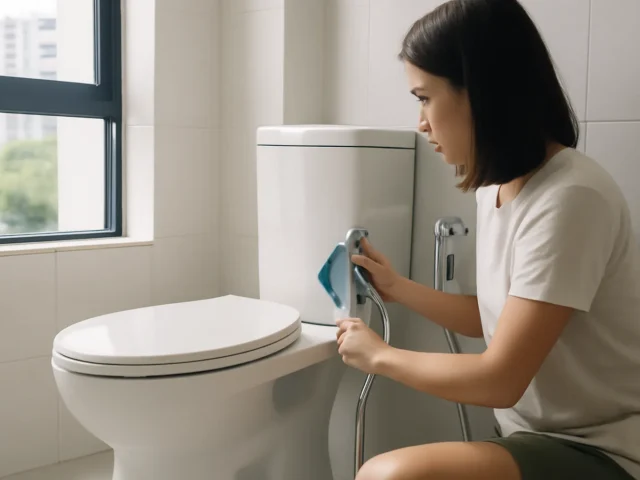
Plastic toys, storage boxes, appliance panels and new electronics often carry labels. Oil and warm soapy water are the safest choice. Rubbing alcohol is fine on many hard plastics, but test first. Do not use acetone or nail polish remover on plastic, as it can soften, cloud or permanently mark many types. Avoid scouring pads too, which leave fine scratches that dull glossy finishes.
Painted walls
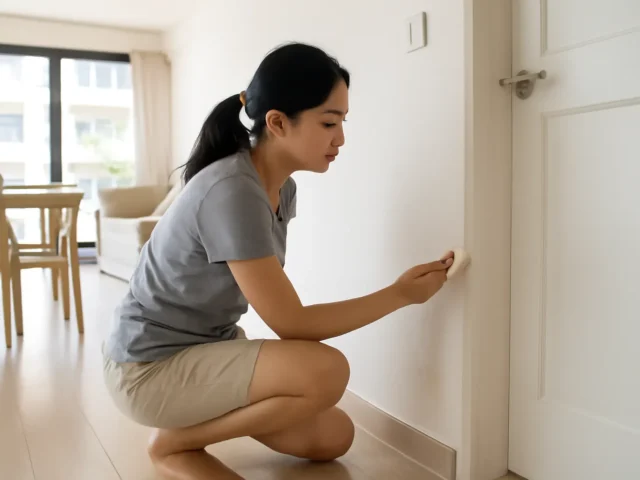
Walls are the hardest surface because the paint is usually the weakest layer. Tape and poster putty can pull paint off when removed, and oil can leave a greasy patch on matt emulsion. Warm the tape gently with a hair dryer and peel it back very slowly, almost parallel to the wall. For a sticky patch, try a soft eraser first, then a cloth lightly dampened with warm soapy water. Rub gently and stop if colour starts coming off on the cloth. If paint lifts, a small touch-up is often less noticeable than scrubbing a large patch.
How to remove tape marks after renovation or a move
Renovation and moving create a particular kind of mess: long strips of masking or protective tape on window frames, door frames, floors and built-in carpentry, often left on for weeks. Here is how to remove tape marks at that scale without damaging new finishes.
- Remove protective tape and film as early as possible. The longer it sits, especially in sunlight, the harder the adhesive becomes. Ask your contractor to take it off as soon as their work in that area is finished.
- Work on one frame or panel at a time. Warm, peel, soften and lift in short sections rather than oiling a whole room at once.
- Treat aluminium frames gently. Use oil and a plastic scraper, then soapy water. Avoid abrasive pads, which scratch powder-coated and anodised finishes.
- Check new carpentry finishes. Laminate and lacquered surfaces scratch easily, so stick to oil, soft cloths and patience.
On a whole flat, adhesive removal is slow, fiddly work, and it sits alongside the dust that renovation leaves everywhere. That is one reason families book post-renovation cleaning or move-in and move-out cleaning before settling in. Femme5 also offers tape stain removal as a $60 add-on to our cleaning services, for homes where residue is the main problem.
Mistakes that damage surfaces
- Using a metal blade on anything except plain glass. It will scratch tiles, frames, plastic and wood.
- Reaching for acetone first. It can strip varnish and damage plastic. Oil and alcohol do the job on most surfaces.
- Using a heat gun or a hot setting. Too much heat can blister paint, warp plastic and crack cold glass. A hair dryer on low is enough.
- Leaving oil behind. An oily patch attracts dust and looks dirtier than the original sticker. Always finish with soapy water.
Frequently Asked Questions
What is the safest way to remove sticker residue at home?
The safest approach for most hard surfaces is to warm the label with a hair dryer on low, peel slowly, then soften what remains with a little cooking oil for five to ten minutes and lift it with a plastic scraper or card. Wash the area with warm soapy water afterwards to remove the oil. Only move on to rubbing alcohol if oil does not work, and test it on a hidden spot first.
Can I use nail polish remover to get rid of sticky residue?
Nail polish remover often contains acetone, which can dissolve varnish, lacquer and many plastics, so it is best avoided on furniture, cabinets, appliances and toys. On plain glass it is less risky, but cooking oil or rubbing alcohol usually works just as well. If you do use any solvent, open the windows, keep it away from heat sources and test a hidden spot first.
How do I remove tape residue from a painted wall without peeling the paint?
Warm the tape with a hair dryer on a low setting, then peel it back very slowly at a low angle, almost parallel to the wall. For any sticky patch left behind, try a soft eraser, then a cloth barely dampened with warm soapy water, rubbing gently. Avoid oil on matt paint, as it can leave a greasy mark, and stop immediately if paint colour appears on the cloth.
Does Femme5 remove tape stains?
Yes. Femme5 offers tape stain removal as a $60 add-on to our cleaning services. It is useful after renovation, before moving in, or when you are handing back a rented home and want frames, glass and carpentry free of adhesive marks.
Conclusion
Sticker and tape residue comes off most surfaces with gentle heat, a little cooking oil, a plastic scraper and a final wash with soapy water. Rubbing alcohol is a good second step, and a razor scraper is useful only on plain glass. The surfaces that need the most care are painted walls, wood finishes and plastic, where harsh solvents and blades do lasting damage.
Work slowly, test first, keep the room ventilated and keep solvents away from heat. If the residue is spread across a whole renovated flat, it is often worth handing over to people who do it every week, alongside the rest of the clean. For smaller jobs around an occupied home, a part-time helper booked by the hour can work through labels, frames and cabinets while tackling the usual chores.
If tape marks and renovation dust are taking over your weekend, we can help. If you would rather leave it to us, see our home cleaning services or deep cleaning, or get in touch with the Femme5 team for a quote.
The Femme5 Team
Home cleaning team, Femme5 Agency
Femme5 provides part-time home cleaning, deep cleaning and post-renovation cleaning for HDB flats, condominiums and landed homes across Singapore.