Spot a small, pale gecko darting behind the curtain and you are seeing one of the most common housemates in Singapore. If you are wondering how to get rid of lizards without harming them, the answer is mostly about making your home less attractive to them. This guide explains why they come in, how to deter them humanely, how to move one out gently, and how to clean up after them hygienically.
Geckos are a normal part of life in a tropical city. They live on HDB walls, condo corridors and landed homes alike, and most of the time they keep to themselves. Many families are relaxed about them; others simply do not want them in the kitchen or bedroom, or are worried about droppings on the counter.
Both reactions are reasonable. The good news is that you rarely need anything harsh. A few changes to lighting, cleaning and sealing usually make a clear difference.
A quick note before we start: Femme5 does not provide pest control. We clean homes, and if you also have an insect infestation, we recommend a pest control company licensed by NEA.
Meet the house lizards in Singapore homes
The lizard you see indoors is almost always a house gecko. The National Parks Board’s Flora & Fauna Web lists the Spiny-Tailed House Gecko, also called the Common House Gecko, with a recorded size of about 13 cm and an urban habitat. Its toes have adhesive pads, which is why it can run up walls and across ceilings with ease.
House geckos are mostly active at night. You hear their distinctive chirping call and see them near lights, waiting for insects. They are generally shy, will run from people, and are not aggressive. They do not damage furniture or chew wiring.
That said, they are not entirely without downsides:
- Droppings. Small dark pellets with a white tip turn up on window ledges, behind frames and on kitchen counters.
- Hygiene. The US Centers for Disease Control and Prevention notes that reptiles often carry Salmonella bacteria, even when they look clean and healthy. That is a good reason to keep them off food surfaces and to clean droppings properly.
- Surprise. A gecko dropping from the ceiling onto someone’s shoulder is harmless but can startle young children and elderly family members.
Why lizards come into your home
Geckos go where the food is, and their food is insects. If your home has a steady supply of moths, flies, mosquitoes and other small insects, geckos will follow. Four things tend to draw them in:
- Lights at night. Bright lights near windows and doors attract flying insects, and geckos gather nearby to feed.
- Insects indoors. Uncovered food, overflowing bins, fruit left out and standing water all bring insects, which in turn bring geckos.
- Easy entry. Open windows without screens, gaps around air-conditioner trunking, pipe openings and gaps under doors are all ways in.
- Hiding spots. Picture frames, wall-mounted cabinets, curtain folds, stacks of boxes and cluttered storerooms give them dark, quiet places to rest during the day.
Understanding this makes the solution clearer. You are not really fighting the gecko. You are removing its reasons to be there.
How to get rid of lizards humanely: step by step
Work through these steps over a week or two. Changes compound, so the more you do, the fewer geckos you see.
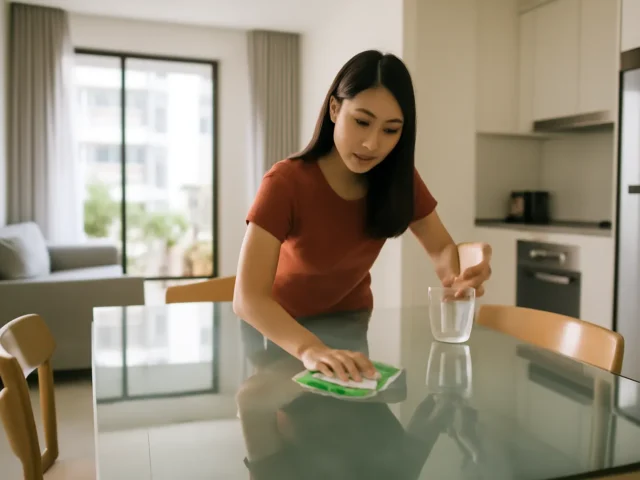
- Cut the insect supply. Store food in sealed containers, wipe counters every night, take kitchen rubbish out daily and keep fruit in the fridge. Empty saucers under plant pots and any other standing water. Our guide on getting rid of ants covers kitchen habits that work just as well here.
- Rethink your lighting. Switch off lights in rooms you are not using, draw curtains in the evening and avoid leaving a bright light on near an open window. Many households find that warmer, dimmer lights near doors and windows draw fewer insects than bright white ones.
- Close the entry points. Keep windows closed in the evening or fit insect screens. Add a draught stopper under doors that lead to corridors or yards. Small gaps around pipes and trunking can be sealed with a suitable household sealant once the area is clean and dry. Any repair or building work should be done by a qualified contractor.
- Remove hiding spots. Clear clutter from storerooms, the tops of cupboards and behind furniture. Our room-by-room guide to clearing out a Singapore home helps here. Check behind wall hangings and pull furniture slightly away from walls when you clean.
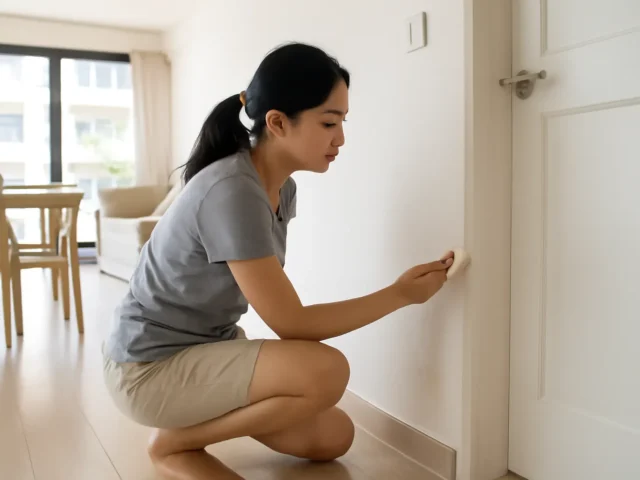
- Clean regularly where they rest. Wipe window ledges, door frames and the tops of cabinets weekly. Removing droppings promptly also stops the smell that some people notice.
How to move a gecko out without hurting it
If a gecko is somewhere you do not want it, such as a child’s bedroom, you can move it gently.
- Stay calm and move slowly. Sudden movements make it run into a gap where you cannot reach it.
- Open a nearby window or door and switch off the room lights. Geckos often head for the open air on their own once the room is dark and quiet.
- Use a container and a card. If it is on a wall at reach height, place a clear plastic container over it, slide a piece of stiff card underneath, and carry it outside or to the corridor greenery.
- Avoid grabbing it with your hands. Handling stresses the animal, and touching reptiles carries the hygiene risk described above.
- Wash your hands with soap afterwards, even if you only touched the container.
What we recommend avoiding
- Glue traps. They cause a slow, distressing death and can catch other small animals.
- Spraying insecticide at geckos. It is not designed for them, and spraying near food areas, bedding or children’s toys exposes your family unnecessarily.
- Mothballs or naphthalene. These are sometimes suggested as a lizard repellent, but they are a chemical hazard indoors, especially around babies, children and pets. Keep them out of living areas.
- Home “repellents” with no evidence. Eggshells, garlic, pepper sprays and coffee grounds are widely shared online, but we found no reliable evidence that they work. Pepper sprays can also irritate eyes and skin.
Cleaning gecko droppings safely
Droppings are the part most families dislike, and they are worth cleaning up properly because of the Salmonella risk.
- Wear disposable gloves.
- Pick up the dropping with a damp paper towel rather than sweeping it dry, which can scatter fragments. Bag it and bin it.
- Clean the spot with warm water and detergent, then wipe it dry.
- Disinfect food-contact surfaces with a household disinfectant used as the label directs, then rinse counters and chopping boards with clean water before you prepare food.
- Wash your hands thoroughly with soap and running water afterwards.
Safety note: never mix bleach with ammonia-based products or with acids such as vinegar, because the combinations release harmful gases. Use one product at a time, keep the room ventilated and test any cleaner on a hidden spot of painted walls or fabric first. For droppings on upholstery, our guide to cleaning a fabric sofa explains how to check fabric codes before you treat a mark.
If anyone in the household develops symptoms such as diarrhoea, fever or stomach cramps, especially a young child, an older adult or someone with a weak immune system, see a doctor. For a medical emergency, call 995.
When geckos are a sign of a bigger problem
A gecko or two is normal. A sudden increase usually means there are more insects than usual. Look for:
- moths or small flies around bins, sinks or the store cupboard;
- signs of cockroaches, such as droppings or egg cases in cabinets;
- termite trails or wings near windows and door frames;
- standing water in the service yard or on the balcony.
Deal with the insect problem and the geckos usually thin out. For persistent insect infestations, engage a pest control company. The National Environment Agency advises that pest control work should only be done by NEA-licensed vector control operators, and publishes a list of them. Femme5 does not provide pest control, but a thorough clean of the kitchen, storeroom and window ledges is something we can help with, and families often book part-time help to keep on top of it week to week.
Related guides: How to Reduce Humidity at Home in Singapore and Keep Mould Away and How to Clean a Washing Machine: Drum, Seal, Drawer and Filter.
Frequently Asked Questions
Are house geckos dangerous?
House geckos are generally shy and not aggressive, and they are a common sight in Singapore homes. The main concern is hygiene, because reptiles can carry Salmonella even when they look healthy, according to the US CDC. Keep them off food surfaces, clean droppings with gloves and detergent, and wash your hands afterwards.
Why do I keep seeing lizards near the lights?
Lights attract flying insects at night, and geckos gather near them to feed. Switching off unused lights, drawing curtains in the evening and keeping windows closed or screened after dark reduces the insects, which in turn reduces the number of geckos waiting by the light.
Do eggshells or garlic keep lizards away?
These remedies are widely shared, but we found no reliable evidence that they work. Your effort is better spent cutting off the insects geckos feed on, sealing entry points and removing hiding spots. These steps address the reason geckos are in your home rather than trying to scare them off.
Should I kill house lizards?
There is rarely a need to. Geckos eat insects, and a humane approach works well: reduce their food, close entry points and gently move any gecko outdoors with a container and card. We recommend avoiding glue traps and insecticide sprays, which cause suffering and add chemicals to your living space.
Is it safe to clean gecko droppings with bleach?
A diluted household disinfectant is fine on suitable hard surfaces if you follow the label, keep the room ventilated and rinse food-contact surfaces afterwards. Never mix bleach with ammonia-based cleaners or acids like vinegar. On fabric or delicate surfaces, use detergent and water and test on a hidden spot first.
Conclusion
Geckos are a fact of life in Singapore, and in small numbers they are harmless neighbours that eat insects. If you would rather not share your kitchen or bedroom with them, work on the causes: fewer insects, smarter lighting, sealed gaps and less clutter. Move any visitor out gently, avoid glue traps and harsh chemicals, and clean droppings with gloves, detergent and handwashing.
Most families find that a cleaner, tidier home with closed or screened windows after dark sees far fewer geckos within a few weeks.
A spotless kitchen and clutter-free storeroom are the best long-term deterrent. Prefer to hand it over? Our regular home cleaning covers routine upkeep, and a deep clean goes further. Ask us for a quote.
The Femme5 Team
Home cleaning team, Femme5 Agency
Femme5 provides part-time home cleaning, deep cleaning and post-renovation cleaning for HDB flats, condominiums and landed homes across Singapore.