If you are wondering how to remove smell from a room for good, the honest answer is that sprays and scented candles only cover it up. A smell is made by something, usually water, food, fabric, mould or smoke, and it keeps coming back until you find that something and deal with it. In a Singapore flat, where the air stays humid all year and windows often stay shut while the aircon runs, odours have every chance to settle in.
This guide shows you how to find the source and clear it properly: drains and floor traps, mould and damp, bins, soft furnishings, and the stubborn one many families ask about, stale cigarette smoke. Where a fix is a job for a plumber or another specialist, we say so.
Start by finding where the smell is coming from
Before you clean anything, close the windows and switch off the fan and aircon for a short while so the air is still. Then walk the room and sniff at different heights. Smells are strongest close to their source.
The type of smell is a strong clue:
- Musty or earthy: damp and mould, often behind wardrobes, under mattresses, inside cupboards or on curtains.
- Sewage or rotten egg: a drain, floor trap or toilet nearby, especially in rooms with an attached bathroom.
- Sour or sweet rotting: food waste, a forgotten snack in a bag or drawer, or a bin that needs washing.
- Stale and sweaty: fabrics such as pillows, mattresses, sofas, rugs and laundry left damp.
- Ashy and bitter: tobacco residue on walls, curtains and furniture.
Check the obvious hiding places too: under the bed, inside shoes, the laundry basket and the dustbin lid. Many “mystery” smells turn out to be a damp towel at the back of a cupboard.
Ventilate first, then deodorise
Fresh air is the cheapest and safest deodoriser you have. The National Environment Agency’s guidance on ventilation and indoor air quality notes that residents can improve home ventilation by opening doors and windows, and using fans to help air circulate.
For a smelly room, try this routine:
- Open the windows and the room door at the same time so air can flow through, not just in.
- Point a fan towards the open window to push stale air out.
- Keep it going for at least an hour on a dry, haze-free day, daily while you work on the source.
A room kept shut with the aircon on all day recycles the same air, so smells build up. Dirty aircon filters can also spread a musty smell; follow the manufacturer’s instructions or call an aircon specialist.
Drains, floor traps and attached bathrooms
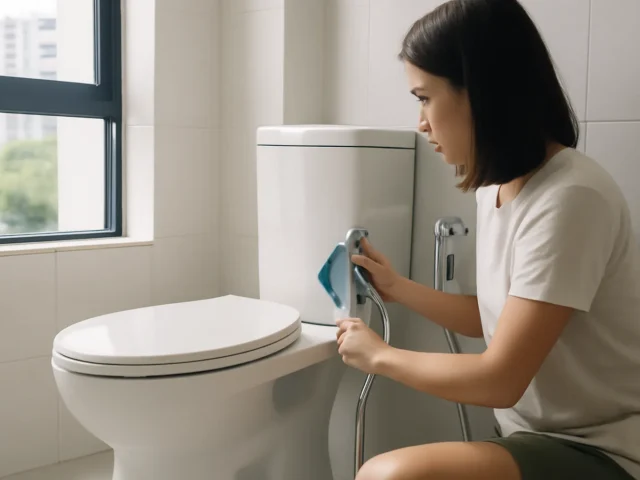
A sewage smell in a bedroom often comes from the attached bathroom. Floor traps in Singapore homes hold a small pool of water, called a water seal, that blocks sewer gases from coming up the pipe. PUB’s Code of Practice on Sewerage and Sanitary Works requires floor traps to keep a water seal of not less than 50mm. If a bathroom is rarely used, that water can evaporate and the smell comes straight through.
Steps you can take yourself:
- Top up the water seal. Pour a pail or a few cups of water into floor traps and sinks in any bathroom that has not been used for a week or more.
- Clear the grating. Lift the floor trap cover, wearing gloves, and remove hair and soap scum. Scrub the cover with detergent and an old toothbrush.
- Flush with hot (not boiling) water and detergent to loosen grease and soap build-up.
- Check the anti-mosquito cover. Make sure it is in place after cleaning, so the water seal does not become a breeding spot.
If water drains slowly, the smell persists after cleaning, or several drains gurgle and smell at once, you may have a blockage or a ventilation problem in the pipes. That is a job for a licensed plumber. HDB residents can also read HDB’s home care guide on choked floor traps. Never pour different drain chemicals in one after another, as mixing them can be dangerous.
Mould and damp: the musty smell that keeps coming back
Singapore’s humidity makes mould the most common cause of a musty room. NEA’s indoor air quality guidance advises finding and fixing the sources of dampness, such as leaks, condensation and moisture coming through walls, and HealthHub lists mould among the allergens that can trigger asthma. HealthHub’s asthma guidance for parents also suggests using a dehumidifier to keep indoor humidity between 30% and 50%, because damp environments encourage mould growth.
Look for grey, green or black spots, especially behind furniture against an outside wall. Then:
- Pull furniture a few centimetres away from walls so air can circulate behind it.
- Empty a musty wardrobe, wash or air the clothes, wipe the inside with mild detergent and let it dry fully.
- Treat small patches of mould on hard surfaces as described in our guide to getting rid of mould on walls.
- Fix the moisture source: a leaking pipe, a ceiling leak, wet laundry dried indoors, or a room that is never aired.
Wear gloves and a mask when cleaning mould, and keep anyone with asthma or allergies out of the room. Large or fast-returning patches usually point to a leak that needs a professional. If you are weighing up machines to keep the air drier, our comparison of a dehumidifier and an air purifier explains what each one actually does. For a smell that spreads through the whole flat, see our guide to getting rid of a musty smell.
Fabrics, mattresses and bins: where smells soak in
Soft surfaces absorb odours and hold on to them, especially mattresses, pillows, sofas, rugs and curtains.
Bedding and mattresses
Wash sheets and pillowcases weekly in the warmest water the care label allows, and dry them fully in the sun or a dryer. For the mattress, sprinkle a thin layer of baking soda, leave it for several hours with the window open, then vacuum thoroughly. Our guide on how to clean a mattress covers stains and drying in more detail.
Sofas, rugs and curtains
Vacuum upholstery and rugs with a brush attachment, then deal with any spills that may have soaked in. Check the cleaning code on your sofa before using water; our fabric sofa cleaning guide explains what each code means. Curtains trap cooking smells and smoke, so washing them often freshens a whole room. See how to clean curtains for fabric-by-fabric steps.
Bins and food
Empty bins with food wrappers daily, and wash the bin itself with hot soapy water every week or two. Keep food out of bedrooms where you can, or clear plates and snack packets each night.
How to remove cigarette smell from a room
Tobacco smoke leaves a sticky residue on every surface it touches. HealthHub describes this as third-hand smoke: residual cigarette particles that remain after a cigarette is put out, settling on belongings and surfaces. It also warns that young children are especially vulnerable, because they crawl on, touch and breathe in particles from those surfaces. So the smell sits in walls and fabrics, not just the air.
Work from top to bottom:
- Air the room thoroughly with windows open and a fan pushing air outwards.
- Remove and wash all fabrics that can be washed: curtains, cushion covers, bedding, throws and soft toys.
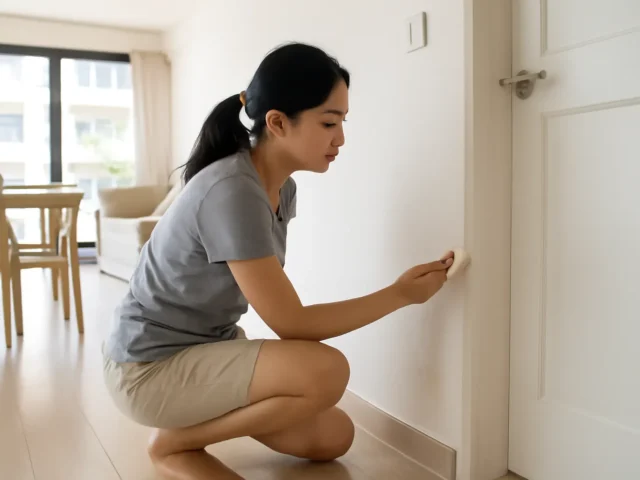
- Wash the walls, ceiling corners, window frames and doors with warm water and a little mild detergent. Test on a hidden spot first so you do not strip the paint, wring the cloth well, and rinse with clean water. A yellowish tint on your cloth is the residue coming off.
- Wipe hard furniture, switches and shelves the same way.
- Treat soft furniture and mattresses with a sprinkle of baking soda, leave it for several hours, then vacuum.
- Repeat over a few days. Heavy, long-term residue rarely comes out in one round.
None of this works if smoking continues indoors. HealthHub advises not allowing anyone to smoke anywhere in or near your home. If someone in the family wants to stop, the HealthHub page above lists the QuitLine on 1800 438 2000 and HPB’s I Quit programme for support.
Safe home-made deodorisers, and what to avoid
Once the source is gone, a few simple items help absorb what lingers:
- Baking soda: leave an open bowl in a wardrobe or corner, or sprinkle it on fabrics before vacuuming.
- White vinegar: a small bowl left out overnight absorbs some odours, and a diluted wipe freshens hard surfaces. Do not use it on marble or natural stone.
- Sunlight: airing cushions, pillows and rugs in the sun is an old, effective habit.
Safety matters more than speed here. Never mix bleach with ammonia-based cleaners or with acids such as vinegar or some toilet cleaners, as the combination can release toxic gases. NEA’s guidance on household disinfectants is clear: do not mix different disinfectant products, and use them in a well-ventilated area. Wear gloves, keep products away from children, and test any cleaner on a hidden spot first.
Go easy on strong air fresheners, incense and scented oils in a room with poor ventilation. They add to the air rather than cleaning it, and can irritate people with asthma. Keep candles and burners away from curtains and never leave them unattended.
Keeping rooms fresh week to week
Once a room smells clean, a few habits keep it that way: air it briefly every morning, dry laundry fully before putting it away, top up floor traps in unused bathrooms weekly, wash bedding weekly, empty bins daily and leave a gap behind furniture.
If a room has been neglected for a long time, a one-off deep clean is often the quickest way to reset it.
Related guides: How to Clean a TV Screen Without Damaging It and How to Wash a Leather Jacket at Home Without Ruining It.
Frequently Asked Questions
Why does my room still smell after I have cleaned it?
Usually because the source is still there. Common culprits are a damp mattress, mould behind a wardrobe, a dry floor trap in an attached bathroom, smoke residue on walls or a dirty aircon filter. Find where the smell is strongest and fix that spot before using any deodoriser.
How long does it take for stale smoke smell to go?
It depends on how long and how heavily smoking went on. A room smoked in briefly may freshen within a day of airing and washing fabrics. Years of residue can take several rounds of washing, and some porous items may never come fully clean.
Is it safe to use bleach to remove smells?
Diluted bleach can help with mould on some hard surfaces, but it is not a general deodoriser. Never mix it with ammonia or acidic cleaners such as vinegar, wear gloves, keep the room ventilated and test on a hidden area first. For fabrics and most odours, washing and airing work better.
Why does my bedroom smell like sewage?
The most likely cause is a floor trap or sink in an attached bathroom whose water seal has dried out, letting sewer gas through. Pour water down every drain in that bathroom and clean the floor trap grating. If the smell returns quickly, water drains slowly or several drains gurgle, call a licensed plumber.
Conclusion
Getting a room to smell fresh again is less about clever products and more about patience: find the source, remove it, let in fresh air, and build small habits that stop the smell returning. In Singapore’s climate, damp and mould are behind many musty rooms, with drains and smoke residue behind most of the rest.
If a smell persists after all this, it may be a leak or pipe problem worth handing to the right professional rather than covering up with another spray.
A fresh home is easier to keep when the deeper cleaning is done regularly. When you need an extra pair of hands, see our part-time home cleaning or deep cleaning options, or talk to the Femme5 team for a quote.
The Femme5 Team
Home cleaning team, Femme5 Agency
Femme5 provides part-time home cleaning, deep cleaning and post-renovation cleaning for HDB flats, condominiums and landed homes across Singapore.