Mouldy walls are one of the most common complaints in Singapore homes, especially in bedrooms and behind wardrobes. In this guide you will learn why mould appears on walls in our climate, how to clean small patches safely, when cleaning is enough and when the wall needs repainting or repair, and how to keep the damp from coming back.
Mould usually announces itself as grey, black or greenish speckles, often in a corner near the ceiling, along the skirting, or on the wall behind a wardrobe or bed. Sometimes the first sign is not visible at all: clothes that smell musty, or a faint damp odour when you open a cupboard.
Wiping the spots away is the easy part. The real work is understanding why that wall stays damp, because mould that is cleaned without fixing the cause will be back within weeks. We will walk through both.
A quick note on health. Mould is a common allergen, and damp rooms can make asthma and allergy symptoms worse. If anyone in your home has ongoing coughing, wheezing or a blocked, runny nose that seems linked to a room, please see a doctor.
Why walls go mouldy in Singapore homes
Mould needs three things: moisture, a surface to feed on, and still air. Our warm, humid climate supplies the first almost all year round, and painted plaster, dust and fabric provide the second. The third is where most homes go wrong.
Common causes
- Trapped air behind furniture. A wardrobe or bed pushed tight against a wall, especially an outside wall, leaves a pocket of still, damp air that never dries out.
- Rooms kept closed. A bedroom with windows shut all day and the door closed has no airflow while you are out.
- Air conditioning cycles. Cool walls in an air conditioned room meet warm, humid air when the unit is switched off or the window is opened, which can leave moisture on surfaces.
- Drying laundry indoors in a room with little ventilation adds a great deal of water to the air.
- Leaks. A damp patch that grows, feels wet, sits below a bathroom, or appears with bubbling paint often points to water getting in. A wall-mounted air conditioner with a blocked or leaking condensate drain can also wet the wall below it. Our guide on cleaning your aircon filter covers basic upkeep, but a leaking unit needs a qualified technician.
- Bathrooms next door. Steam from a bathroom without an exhaust fan or open window spreads into adjoining walls. Our article on removing mould in the bathroom deals with the source.
Is it mould, mildew or a leak? How to check
Before you clean, take two minutes to work out what you are dealing with.
- Surface mildew is usually flat, grey or white and powdery, and wipes away easily. It is an early stage of mould growth and responds well to cleaning and better airflow.
- Established mould is darker, black or green, sometimes fuzzy, and may leave a stain after cleaning because it has grown into the paint.
- Water damage shows as bubbling or peeling paint, crumbly plaster, tide marks, or a patch that feels cold and wet to the touch. Cleaning will not solve this.
A simple test is to dab the spot with a cloth dampened in a mild detergent solution. If it lifts easily and the wall underneath is dry and sound, you are dealing with surface growth. If the wall feels wet, the paint is lifting, or the patch keeps spreading, look for a leak first.
In an HDB flat, the Housing and Development Board’s home care guide on ceiling leaks explains that flat owners are responsible for maintaining their flat, and that leaks from common property should be reported to your Town Council. If the damp is coming from the flat above, speak to your neighbour and HDB. In a condominium, contact your managing agent.
How to clean mouldy walls safely, step by step
These steps are for small patches on painted walls inside the home. For large areas, see the section on calling a professional.
Safety first
- Wear rubber gloves, a well-fitting mask and eye protection, because scrubbing releases spores and cleaning solution can splash.
- Open windows and run a fan pointing out of the room. The National Environment Agency’s guidelines for cleaning residences recommend ventilating the home during and after cleaning.
- Never mix cleaning products. Bleach must never be combined with ammonia or with acids such as vinegar, because the mixture releases harmful gases. Do not use them one after the other on the same patch either.
- Keep children, older relatives and anyone with asthma out of the room while you work and until it has aired.
- Test any solution on a hidden part of the wall first, as some paints mark or discolour.
The method
- Clear the area. Move furniture away from the wall and remove any clothes or fabric from nearby. Lay old towels along the floor.
- Do not dry brush. Brushing dry mould sends spores into the air. Always dampen the surface first.
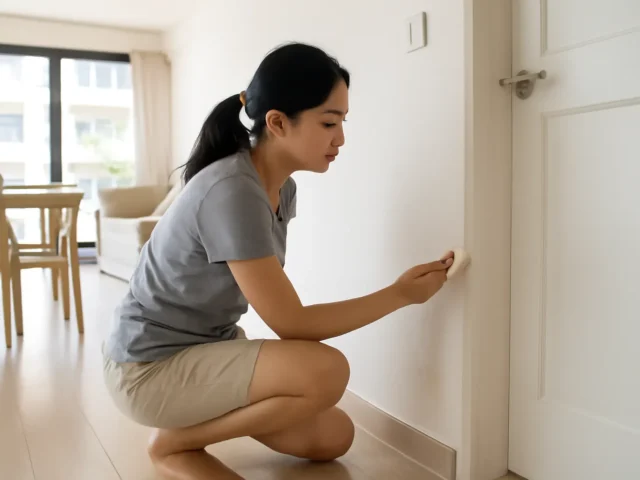
- Wash with mild detergent. Mix a little dishwashing liquid into warm water. Using a soft sponge or cloth, wipe the patch gently, working from the outside inwards. Rinse the cloth often.
- Treat lingering spots. For marks that remain, lightly spray undiluted white vinegar, leave it for about an hour, then wipe with a clean damp cloth. Vinegar suits most painted walls but can affect some finishes, so test first. Alternatively, use a mould cleaner made for indoor walls and follow its label exactly.
- Rinse and dry. Wipe the area with a cloth dampened in plain water, then dry it thoroughly with a towel. Run a fan on the wall for several hours afterwards.
- Bag and wash. Seal used cloths and sponges in a bag before disposal, or wash them on a hot cycle. Wash your hands and change your clothes.
Bleach is often suggested for mould, but it is harsh on painted walls and can discolour them, while its fumes linger in a bedroom. If you choose a bleach based product, use it only where the label says it is suitable, ventilate well, and never let it meet vinegar or ammonia.
Do not forget the contents
Clothes, bags and shoes stored against a mouldy wall should be checked. Wash washable items, air them, and dry them fully before putting them back. Leather and fabric items with heavy growth may not be salvageable. If the bed was against the wall, inspect the mattress too; our guide on how to clean a mattress covers safe drying.
Cleaning vs repainting: when the wall needs more
Cleaning removes surface growth. It will not fix paint that mould has grown into, or plaster that has been wet for a long time. Consider repainting or repair when:
- dark staining remains after two careful cleans;
- the paint is bubbling, flaking or peeling;
- the plaster underneath is soft, crumbly or has hairline cracks with damp marks;
- the mould keeps returning to the same spot despite better airflow.
The order matters. First stop the moisture, then let the wall dry out completely, which may take days or weeks after a leak. Only then should the wall be scraped back, treated and repainted, often with a primer and a paint designed for humid rooms. Painting over damp plaster or live mould simply traps the problem. Femme5 does not carry out painting or renovation, so please use a qualified contractor for this work.
Preventing mould from coming back: airflow and dehumidifying
Prevention is mostly about moving air and lowering humidity. These habits make the biggest difference.
- Leave a gap behind furniture. Keep wardrobes and beds a few centimetres away from walls, particularly outside walls, so air can circulate.
- Air the wardrobe. Do not overpack it, open the doors regularly, and only put away clothes that are completely dry. Moisture absorbers can help in enclosed spaces; replace them as directed.
- Open windows for part of each day when the weather allows, and leave internal doors open so rooms share airflow.
- Use a dehumidifier in rooms that stay damp. HealthHub’s guidance for parents of children with asthma notes that damp environments encourage mould and suggests keeping indoor humidity between 30% and 50% with a dehumidifier. Empty its tank and clean it as the manufacturer advises.
- Vent bathrooms and the kitchen while showering and cooking, and run the exhaust fan or keep a window open for a while afterwards.
- Dry laundry outdoors or in a well ventilated area rather than in a closed bedroom.
- Check monthly. Look behind furniture and in wardrobe corners as part of a routine. Our household cleaning schedule builds this in.
Damp rooms also suit dust mites. If allergies are an issue, read our guide on dust mites in Singapore homes.
When to call a professional
Do-it-yourself cleaning suits small, surface patches on sound walls. Bring in professional help when:
- the mould covers a large area or spreads across several walls or rooms;
- it keeps returning after cleaning and better ventilation;
- there is a leak, water damage or soft plaster, which needs a contractor, your Town Council, HDB or your managing agent depending on the cause;
- someone in the home has asthma, allergies, a weakened immune system or a respiratory condition and should avoid exposure;
- mould is inside air conditioning units or ducts, which need a qualified technician.
When choosing a mould treatment Singapore service, ask how they will find and address the cause, not just clean the surface.
Related guides: How to Clean Kitchen Cabinets: Laminate, Wood, Lacquer and Grease and Red Wine Stain Removal for Clothes, Carpets and Sofas.
Frequently Asked Questions
Is mould on bedroom walls dangerous?
Mould is a common allergen, and HealthHub lists it among the triggers for allergic rhinitis. Damp, mouldy rooms can worsen asthma and allergy symptoms, particularly in children, older people and anyone with a respiratory condition. Clean small patches promptly, fix the source of moisture, and see a doctor if anyone develops ongoing coughing, wheezing or nasal symptoms.
Can I just paint over mould on a wall?
No. Paint applied over live mould or damp plaster traps the moisture, and the mould usually grows back through the new paint. Stop the source of damp, clean the mould off, let the wall dry completely, and then prepare and repaint it, ideally with a primer and paint suited to humid rooms.
Why does mould keep growing behind my wardrobe?
The wardrobe blocks airflow, so the air behind it stays still and humid, especially against an outside wall. Move the wardrobe a few centimetres away from the wall, avoid overpacking it, open it regularly, and consider a dehumidifier for the room. If the wall itself feels wet, check for a leak.
Should I use bleach or vinegar on mouldy walls?
For most painted walls, start with mild detergent and water, then use white vinegar on any spots that remain, testing on a hidden area first. Bleach can discolour paint and gives off strong fumes. Never mix bleach with vinegar, other acids or ammonia, and never use one straight after the other, because the reaction releases harmful gases.
Conclusion
Mouldy walls are a moisture problem first and a cleaning problem second. Clean small patches gently with detergent and, where needed, vinegar, protect yourself while you work, and dry the wall thoroughly. Then fix the cause: move furniture away from walls, keep air moving, bring humidity down, and get any leak looked at by the right party.
Where the paint or plaster is damaged, dry the wall out completely before repainting, and call in a professional for large areas, recurring growth or anyone with health concerns at home.
Once the cause is fixed, regular cleaning keeps the rest of the home fresh. If you would rather not do it yourself, our cleaning service handles weekly upkeep and our deep cleaning team takes on the bigger jobs. Get a quote from Femme5.
The Femme5 Team
Home cleaning team, Femme5 Agency
Femme5 provides part-time home cleaning, deep cleaning and post-renovation cleaning for HDB flats, condominiums and landed homes across Singapore.