Learning how to clean walls is mostly about restraint. Painted walls look tough, but the wrong sponge or too much water can leave a shiny patch, a pale halo or a streak that is more obvious than the mark you started with. This guide explains how to clean walls according to their paint finish, how to lift everyday marks like crayon, putty residue and scuffs, how to deal with light mildew, and why a test patch comes first every time.
Walls in Singapore homes take a lot. Children draw on them, furniture bumps them, kitchen walls collect a fine film of oil, and humidity can encourage mildew in bathrooms, storerooms and behind wardrobes. Most of this can be handled at home with mild soap, water and patience.
What you should not do is reach for the strongest cleaner in the cupboard. On most painted walls, gentle methods give better results, and they will not damage a finish you may have paid good money for during renovation.
Start by identifying your paint finish
The finish of your paint decides how much cleaning a wall can take. If you are not sure what was used, look at the wall at an angle against the light.
- Matt or flat: no shine at all. It hides imperfections well but is the most delicate to clean. Scrubbing can burnish it, leaving a shiny or pale patch, and water can leave tide marks.
- Eggshell or low sheen: a soft glow. It tolerates a gentle damp wipe better than matt.
- Satin: a noticeable sheen, common in kitchens, bathrooms and children’s rooms because it wipes more easily.
- Semi-gloss and gloss: shiny and the most washable, often used on doors, trims and skirting.
Many paints are now sold as washable even in a matt finish. If you still have the paint tin or the renovation contractor’s details, check what was used. Otherwise assume the wall is delicate until you have tested it.
Always do a test patch first
Before you clean any visible area, try your method on a hidden spot, such as behind a door, inside a wardrobe recess or low down behind furniture.
- Apply the cleaner with the same cloth and pressure you plan to use.
- Wipe it off with a damp cloth and pat dry.
- Let it dry completely, ideally for an hour or more, then look at it from several angles in daylight.
If the patch looks shinier, duller, lighter or streaky, stop and switch to a gentler method. This one step saves more walls than any cleaning product.
How to clean walls: the general wash
For walls that look dingy overall, especially in hallways, kitchens and children’s rooms, a gentle wash every so often brings them back.
- Prepare the room. Move furniture away, lay old towels along the skirting and switch off power to any wall sockets or switches in the area you are cleaning. Keep water well away from electrical fittings.
- Dust first. Wipe or vacuum the wall with a soft brush or dry microfibre cloth, top to bottom, to remove cobwebs and loose dust.
- Mix a mild solution. Add a few drops of mild dishwashing liquid to a basin of warm water.
- Wipe with a well-wrung cloth or sponge. It should be damp, not dripping. Work in small sections with light, overlapping strokes.
- Rinse. Go over each section with a second cloth dampened in plain water to remove soap residue.
- Dry. Pat with a clean towel and ventilate the room so the wall dries evenly.
Some people wash from the bottom up so drips do not run over dirty paint and leave streaks. Others prefer top down. Either works if your cloth is properly wrung out, which is the real secret. On matt paint, skip the full wash where you can and clean only the marks.
Spot cleaning common marks
Most wall cleaning is really spot cleaning. Treat the smallest area you can, with the gentlest method first.
Crayon and pencil
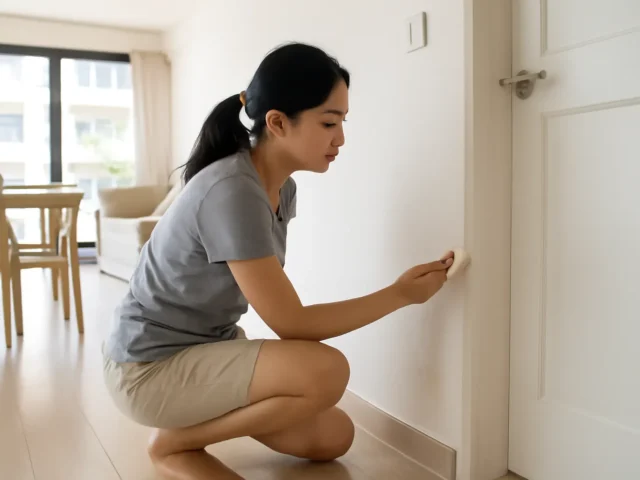
Start with a dry cloth or a clean, soft pencil eraser, rubbing lightly. If marks remain, make a paste of baking soda and a little water, apply it with a damp cloth, and rub very gently in small circles, then rinse and dry. A melamine foam sponge can lift crayon well, but it is mildly abrasive and can dull or polish matt and eggshell paint, so test it and use the lightest touch.
Putty and tape marks
Reusable poster putty often leaves a greasy, darker spot. Press a fresh piece of the same putty onto the residue and lift it off repeatedly, which picks up leftover bits. For the oily shadow, dab with a cloth dampened in mild soapy water and rinse. Tape can pull paint or leave adhesive behind; for glue residue on walls, glass and tiles, our guide on how to remove sticker residue covers gentle methods. Avoid solvents on painted walls unless you have tested them, since they can soften or strip paint.
Scuffs from shoes, bags and furniture
Rub lightly with a clean soft eraser or a dry microfibre cloth. If that fails, use a damp cloth with a little soapy water. On glossier paints, a dab of baking soda paste usually lifts black scuffs, followed by a rinse. Our guide to removing scuff marks also covers floors and doors.
Grease and food splashes
Kitchen walls and areas around dining tables collect oil. Use warm water with slightly more dishwashing liquid, let it sit on the spot for a minute, then wipe and rinse. Repeat rather than scrubbing harder.
Fingerprints around switches
Switch off first if you need to clean right up to the plate. Wipe with a barely damp soapy cloth, never spraying liquid towards the switch, and dry straight away.
How to clean mildew off walls
In humid rooms, you may see small grey, black or green speckles, often in corners, near ceilings or behind furniture against outside walls. Here is how to clean mildew off walls when it is light and on the surface. Larger or recurring growth, or anything coming back through the paint, is a bigger moisture problem we cover separately in our guide to mould on walls.
- Protect yourself. Wear gloves and a mask, and open windows or run a fan.
- Start mild. Wipe the spots with warm water and mild dishwashing liquid, using a cloth you can throw away or wash in hot water afterwards.
- If spots remain, dab with diluted white vinegar on a hidden area first, then on the affected spots. Leave it briefly, wipe, rinse with plain water and dry.
- Dry the area well and keep the room ventilated over the next few days.
Diluted bleach is sometimes used on white, bleach-safe surfaces, but it can discolour coloured paint and is harsh in a closed room, so test carefully and follow the label if you use it. Most importantly, never mix bleach with vinegar, ammonia or other cleaners. Bleach combined with acids or ammonia releases harmful gases. The National Environment Agency’s guidance on using household disinfectants safely says not to mix different products and to use them in a well-ventilated area. If you used one product, rinse the wall thoroughly with water before trying another.
Prevention matters as much as cleaning. Leave a small gap between wardrobes and walls, run the bathroom exhaust fan or open the window after showers, and let rooms air out regularly.
What not to do on painted walls
- Do not soak the wall or use a dripping sponge. Water runs, streaks and can seep into cracks.
- Do not scrub matt paint hard. It polishes the surface and leaves a visible patch.
- Do not use scouring pads or abrasive powders except on tough, glossy surfaces, and even then test first.
- Do not spray liquid near sockets, switches or lights.
- Do not stand on chairs to reach high areas. Use a stable step stool or an extendable mop with a soft, clean head.
- Do not use solvents on paint without testing, and never mix cleaning chemicals.
If a mark will not lift without damaging the paint, a touch-up with matching paint is often the better answer than more cleaning.
Making wall care part of the routine
Walls rarely need a full wash more than once or twice a year in most homes. What keeps them looking fresh is catching marks early. Fresh crayon, splashes and fingerprints come off far more easily on the day they happen.
If you have a live-in helper, show her which walls are matt and need a light touch, and where the test-patch areas are. Clear guidance at the start avoids well-meaning scrubbing that leaves shiny patches. Our article on simple cleaning routines for your helper has more on setting expectations. While you are working top to bottom in a room, it is also a good moment to dust window coverings, as in our guide to cleaning blinds.
For tape marks that are stubborn or widespread, Femme5 offers tape stain removal as an add-on to our cleaning services at $60.
Related guides: How to Clean a Shower Head: Limescale, Mould and Blocked Nozzles and How to Clean a Shower Head: Limescale, Mould and Blocked Nozzles.
Frequently Asked Questions
Can I use a melamine foam sponge on painted walls?
You can, but carefully. Melamine foam sponges work like very fine sandpaper, so they lift crayon and scuffs well but can dull or polish matt and eggshell paint. Test on a hidden area, use it only on the mark, press lightly and wipe with a damp cloth afterwards.
How often should I wash my walls?
Most walls only need a full gentle wash once or twice a year, with spot cleaning whenever marks appear. Kitchen walls and areas around switches, doorways and children’s play spaces may need attention every few weeks. Dusting walls and ceilings when you do a deeper clean also helps.
Why did cleaning leave a shiny or pale patch on my wall?
That usually means the paint, often a matt finish, was rubbed too hard or cleaned with something abrasive, which changes how the surface reflects light. It is very hard to reverse by cleaning. A careful touch-up with matching paint is usually the fix, which is why testing a hidden spot first matters.
Is vinegar safe for cleaning walls?
Diluted white vinegar is usually fine on washable painted walls for light mildew or grime, but test it first because it can affect some finishes. Rinse with plain water afterwards. Never use vinegar together with bleach or straight after it without rinsing, because acids mixed with bleach release harmful gas.
Should I clean walls before repainting?
Yes. Paint grips better on a clean, dry surface, so wipe away dust, grease and any mildew first and let the wall dry fully. Kitchen walls in particular need degreasing. If mildew keeps returning, the underlying damp should be addressed before repainting or it will come back through the new paint.
Conclusion
Clean walls come from gentle methods applied early. Identify the paint finish, test every method on a hidden spot, use mild soapy water on a well-wrung cloth, rinse and dry. Lift crayon, putty and scuffs with the lightest effective touch, and treat light mildew with care, good ventilation and never a mix of chemicals. When something will not shift without harming the paint, stop and consider a touch-up instead.
Whether it is one stubborn mark or a whole flat that needs freshening up before guests arrive, a little method goes a long way. If you would rather leave it to us, see our home cleaning services or deep cleaning, or get in touch with the Femme5 team for a quote.
The Femme5 Team
Home cleaning team, Femme5 Agency
Femme5 provides part-time home cleaning, deep cleaning and post-renovation cleaning for HDB flats, condominiums and landed homes across Singapore.