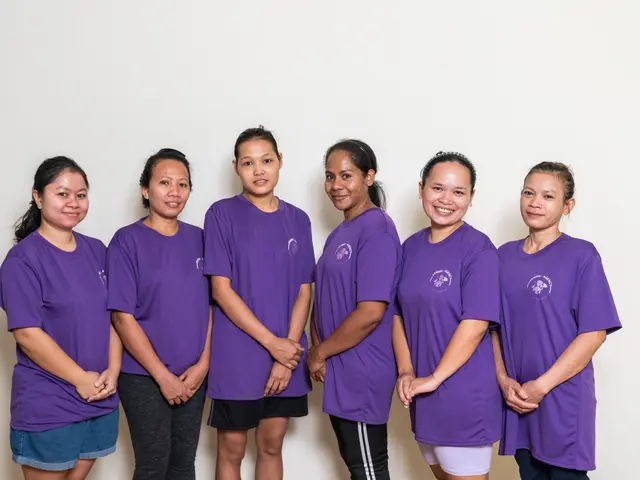
Most of the attention in hiring goes to matching, interviews and paperwork. What is discussed far less is helper accommodation between employers: where a helper actually lives while a transfer is processed, while her employer is overseas, or in the days before she starts with a new family. This guide explains when that question comes up, what the Ministry of Manpower requires in each situation, who is responsible for her upkeep, and what to look for in an agency’s boarding house.
The in-between period is not empty time. A helper who spends it somewhere safe, with proper rest, food and someone keeping track of her documents, starts her next placement on a much steadier footing than one left to sort things out on her own in an expensive city.
It is also not a grey area legally. MOM sets out who must house and look after her in each scenario, and the rules differ depending on whether her Work Permit is still active, cancelled, or in the middle of a transfer.
At Femme5, we run our own boarding house for helpers, so we deal with these situations every week. Here is what employers should know.
When a helper needs accommodation between employers
Most stays away from an employer’s home fall into a handful of situations.
- A transfer through an agency. When an employer authorises an agency to cancel her Work Permit so she can be transferred, she needs somewhere to live while a new employer is found and the new permit is processed.
- The employer is travelling overseas. Some families would rather not leave their helper alone at home, or have no relative who can host her.
- The family is moving or renovating. If the old flat has been handed over and the new one is not ready, there may be no suitable room for her for a while.
- She is preparing for a new placement. Before she starts with a family, a short stay gives time for rest, orientation and pre-training.
Each of these has different rules, so it helps to know which one applies before you make arrangements.
What MOM requires during an agency transfer
When you transfer a helper through an employment agency, MOM’s guidance on transferring to a new employer through an EA sets out a clear handover of responsibility. You first check that she is agreeable to the transfer, agree the terms with the agency in writing, and authorise the agency through FDW eService. Once the agency cancels her Work Permit, the agency is responsible for her until she is deployed to a new employer or leaves Singapore.
During that period, MOM says the agency must:
- pay for her upkeep and maintenance, including acceptable accommodation, adequate food and medical treatment;
- buy and maintain her medical insurance with coverage of at least $60,000;
- pay for her ticket home, to the international airport or port nearest her hometown, if no new employer is found before her Special Pass expires, which is issued with up to 30 days’ validity.
MOM can take action against agencies that do not meet these responsibilities, including demerit points. This is one reason why helpers need a boarding house run by the agency itself: the agency carries the legal duty to house her, so it should be able to show you where and how.
A direct transfer works differently. Under MOM’s transfer process, her current permit stays valid while the new employer applies, and the current employer pays levy until the new permit is issued. The new permit must be issued within 21 days of approval or by the old permit’s expiry, whichever is earlier. Our guide to how the MOM transfer process runs covers both routes in detail.
When you travel: MOM’s temporary accommodation rules
Your helper is meant to live and work at the address you declared to MOM. MOM does allow a temporary arrangement while you are overseas, but only on set conditions. According to MOM’s page on notifying MOM of changes:
- She may stay with a friend, a relative or an employment agency, provided the temporary accommodation does not exceed one month.
- You must notify MOM at least 7 days before your trip. MOM sends an email acknowledgement within one day.
- The accommodation must meet the requirements of MOM and other public agencies, and an agency’s boarding facility must comply with the Employment Agencies licence conditions.
- You must tell her about the arrangement before you leave Singapore.
- Whoever hosts her must look after her well-being, and she must not be asked to do any work at the premises.
- If the arrangement changes, you must notify MOM again before proceeding.
Your responsibilities continue while you are away. MOM expects you to keep paying her salary and levy, provide for her upkeep, including accommodation, food and medical treatment, and stay contactable. Note that MOM’s levy waiver for overseas leave applies when the helper herself is out of Singapore, not when you are.
If the reason is a move or renovation rather than travel, talk to us first. MOM’s published arrangement covers stays while you are overseas, and when you move you must update your residential address with MOM within 2 weeks of the change.
Why helpers need a boarding house, not just a bed
Think about the alternative. A helper between employers who has to find her own room in Singapore faces high costs, unfamiliar rules and real uncertainty about when her next job will start. She has to manage her own meals and travel, keep track of medical appointments and paperwork, and do it all without a clear point of contact.
That is stressful for anyone, and it says nothing about her work ethic or ability. It simply means she may arrive at your home tired and anxious rather than rested and ready. A properly run boarding house removes most of that load.
What good accommodation looks like
MOM’s accommodation guidelines set a minimum that applies wherever she sleeps. She must be protected from sun, rain and wind, away from dangerous equipment or structures, and given adequate space and privacy. She must not share a bedroom with a male adult or teenager, and she should have at least a mattress, pillow, blanket, bathroom amenities and toiletries. A good boarding house should meet these standards comfortably, not just on paper.
How Femme5’s boarding house supports helpers in transition
Our boarding house is short-stay by design. It bridges a gap and does not replace a proper home with her employer. Within that, we aim for three things.
A safe, well-maintained place to rest
Our facility is secure and well kept, so helpers can sleep properly and recover from what is often an unsettling few days. Rest sounds basic, but it shapes how she copes in her first week with a new family.
Orientation and pre-training
Time at the boarding house is used well. Before a new placement, we cover Singapore household routines, MOM rules and her rights, how to raise concerns respectfully, practical childcare and elderly care basics, and what to do in an emergency. Our article on how Femme5 pre-trains helpers explains this in more detail.
Keeping the paperwork on track
Missed medical appointments and incomplete documents are common reasons a placement starts late. While a helper is with us, our team keeps track of what is due, such as her medical examination or Work Permit steps, and follows up so a delay does not land on you. If she needs to get to a clinic, the airport or an embassy, our helper transport service can help.
Questions to ask any agency about its boarding house
If you are comparing agencies, the boarding house is one of the most useful and most often skipped questions. These five are worth asking directly.
- Do you run your own boarding house, or outsource it? An agency that manages its own facility has clearer accountability for what helpers experience.
- Who looks after helpers during their stay? Ask who she can turn to if she feels unwell or has a problem.
- Does the facility meet MOM’s accommodation guidelines and the licence conditions? A good agency will answer this without hesitation.
- What orientation is included? Ask whether it covers practical household situations, MOM rules and communication.
- How do you track documents and appointments? A missed appointment can push back a start date, so ask whether the agency monitors this or leaves it to the helper.
Frequently Asked Questions
Where does a helper stay during a transfer to a new employer?
It depends on the route. In a direct transfer her current permit stays valid until the new one is issued, so she normally continues with her current employer. In a transfer through an agency, once the agency cancels her Work Permit it becomes responsible for her upkeep, including acceptable accommodation, food and medical treatment, until she is deployed or leaves Singapore.
Can I leave my helper at an agency boarding house while I travel?
Yes, for up to one month, provided you notify MOM at least 7 days before your trip, tell her about the arrangement before you leave, and the facility meets MOM’s requirements and the agency licence conditions. You keep paying her salary and levy, provide for her upkeep and stay contactable while you are away.
Is my helper allowed to work while she stays at a boarding house?
No. MOM’s rules for temporary accommodation while you are overseas say whoever hosts her must look after her well-being and she must not be asked to do any work at the premises. The same applies if she stays with a relative or friend instead.
Do I still pay levy while my helper stays at a boarding house?
Yes, if her Work Permit with you is still active, levy continues as normal. MOM’s levy waiver for overseas leave only covers periods when the helper herself is out of Singapore for at least 7 consecutive days, not your own trip.
How long can a helper stay at an agency while waiting for a new employer?
In an agency transfer, her Special Pass is issued with up to 30 days’ validity. If no new employer is found before it expires, MOM requires the agency to pay for her ticket home to the international airport or port nearest her hometown.
Conclusion
Where a helper lives between employers is not a side detail. MOM spells out who must house and care for her in each situation, from an agency transfer to an employer’s overseas trip, and those rules exist because this period can leave helpers exposed. A well-run boarding house turns that gap into time for rest, orientation and getting paperwork in order.
For employers, the practical steps are simple: know which situation you are in, notify MOM where required, keep paying what you owe, and ask any agency to show you where your helper will stay. A helper who arrives rested and informed is in a far better position to start well with your family. Our guide on handling homesickness has ideas for helping her settle once she arrives.
If you are planning a trip, a transfer or a new placement and want to know how a stay at our boarding house would work, we are happy to talk it through. You can get in touch with the Femme5 team to discuss your family’s needs, read more about how we work with employers, or explore what a good placement looks like.
The Femme5 Team
Maid placement specialists, Femme5 Maid Agency
Our consultants work with Singaporean and expatriate families on helper matching, contracts and MOM compliance, and we verify the regulatory guidance in our articles directly against the Ministry of Manpower’s published requirements.