Few things unsettle a household like droppings behind the fridge or a scratching noise in the false ceiling at night. If you are wondering how to get rid of rats, the honest answer is that lasting results come from two things working together: removing what attracts them to your home, and bringing in a licensed pest control operator when there is an active infestation. This guide covers both, along with how to spot the signs early, how to clean up safely, and how to report rats to the authorities.
Rats are not just a nuisance. The National Environment Agency (NEA) notes that they can spread diseases such as leptospirosis, murine typhus and hantavirus, either directly or by contaminating food, water and surfaces. That is why NEA advises the public not to try to catch or handle rats themselves.
The good news is that the home habits which keep rats away are simple, cheap and good for general hygiene too. Most of them come down to food, rubbish and gaps.
Signs you have rats in the house
Rats are shy and mostly active at night, so you are more likely to notice what they leave behind than the animals themselves. NEA’s rat prevention guidance for the public lists these early signs:
- Live sightings. Seeing a live rat may mean there are more, as rats live in groups.
- Droppings. Small, dark pellets, usually near food or along the routes rats use to reach their nests.
- Gnaw marks. Rough-edged holes in plastic, food packaging, wood or cables.
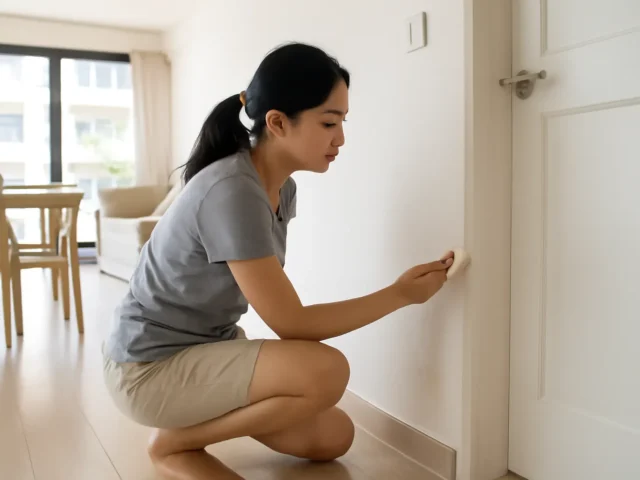
- Rub marks. Greasy, dirty smears along the lower edges of walls, pipes and other surfaces they run along.
- Footprints. Tracks in dusty areas such as storerooms or the top of kitchen cabinets.
- Burrows. Round openings in disturbed soil, more relevant for landed homes with gardens.
Other clues include scratching or scurrying sounds in the ceiling or walls at night, a strong musty smell in enclosed spaces, shredded paper or fabric used as nesting material, and pets that suddenly become interested in one spot.
Gnawed cables deserve particular attention. Damaged wiring is a fire risk, so if you find chewed electrical cables, stop using the appliance and have it checked by a qualified electrician.
Rats in a house in Singapore: why they come in
Rats need three things: food, water and shelter. NEA notes they are commonly found where these are easy to get, such as around bins, in back lanes between buildings and in turf where they can burrow. In a home, the usual attractions are:
- food waste left in open bins or bags left out overnight;
- food stored in thin packaging on open shelves or the kitchen floor;
- crumbs, spills and grease build-up behind and under appliances;
- pet food and water left out overnight;
- fallen fruit from garden trees in landed homes;
- cluttered storerooms, service yards and false ceilings that offer quiet nesting spots;
- gaps under doors, around pipes and in damaged walls or ceilings.
Ground-floor units, shophouses and landed homes are often more exposed, but rats can reach upper floors through pipes, refuse chutes and gaps in shared spaces. Whatever kind of home you live in, the prevention steps are the same.
How to get rid of rats: prevention steps that work
These steps follow NEA’s guidance for homeowners. They will not remove an established colony on their own, but they make your home far less attractive and stop rats returning after treatment.
1. Manage food waste properly
- Tie food waste in thick plastic bags.
- Dispose of it in the refuse chute or a covered bin, not beside an overflowing one.
- Never leave rubbish bags outside your door or in the corridor overnight.
- Keep your kitchen bin lidded, and empty it daily.
2. Store food securely
Keep rice, flour, biscuits, cereals, dried foods and snacks in tightly covered glass or thick plastic containers, as NEA recommends. Rats can chew through cardboard and thin plastic bags easily. Do not store food on the floor, and keep fruit in the fridge or a covered container.
3. Clean up crumbs and spills promptly
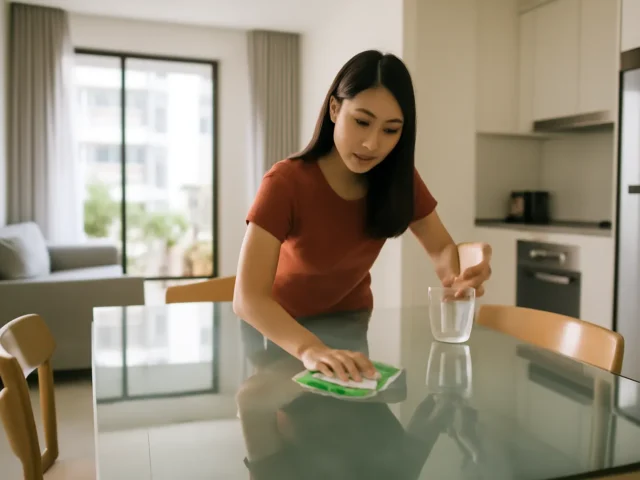
Wipe counters and sweep the kitchen floor after each meal. Every so often, pull out or look behind the fridge, cooker and washing machine, where grease and crumbs collect unseen. Our guides to cleaning the fridge and cleaning kitchen cabinets cover the hidden spots, and a household cleaning schedule helps make it routine.
4. Clear pet food and garden debris
Put pet food away after feeding time rather than leaving bowls out overnight. In landed homes, pick up fallen fruit and keep the garden tidy so there are fewer places to burrow and hide.
5. Declutter
Boxes, old newspapers and unused items stacked in a storeroom or service yard make ideal nesting spots. Keep these areas organised and off the floor where possible, and go through them regularly.
6. Seal entry points
NEA advises sealing gaps under doors and holes or cracks in walls, and inspecting and sealing gaps in false ceilings. A door bottom seal or brush strip helps with gaps under doors. For holes around pipes or damaged ceilings, engage a qualified contractor or speak to your building management.
When to call a licensed pest control operator
If you are seeing droppings regularly, hear rats in the ceiling, or spot a live rat indoors, prevention alone is not enough. This is the point to bring in professionals.
In Singapore, only companies registered with NEA as Vector Control Operators can be engaged for pest control work, and their staff must be licensed technicians or certified workers. NEA publishes a list of registered operators on its vector control operator page. Workers can show an electronic or printed licence or certificate for identification, so it is reasonable to ask to see it.
When you engage an operator, ask:
- how they will inspect for entry points and nesting sites;
- what treatment they plan to use and where, particularly if you have young children, elderly family members or pets;
- what precautions your household should take during and after treatment;
- how many follow-up visits are included.
We would gently discourage buying rat poison or traps and setting them yourself. NEA advises the public not to catch or handle rats, and poisons can be dangerous for children and pets. A rat that dies inside a wall or false ceiling also creates a smell that is hard to deal with. A licensed operator can place treatments safely and remove carcasses properly.
Please note that Femme5 does not provide pest control. Our cleaners can help with the regular cleaning and decluttering that keeps rats away, but treatment must be done by an NEA-registered operator. If you suspect other pests too, our guide to termites in Singapore homes explains the signs.
Reporting rats outside your home
If rats are coming from common areas, back lanes, bin centres or nearby food premises, NEA asks the public to report sightings or signs of rat activity through the OneService app. Include as much detail as you can:
- the exact location and time of the sighting;
- the direction the rats came from and went to;
- photos or videos, if you can take them safely;
- roughly how many you saw and how often;
- any food waste or litter nearby.
Treating your own unit while rats keep arriving from outside is frustrating, so a report helps the whole block.
How to clean up safely after rats
Rat urine and droppings can carry disease, so clean them up carefully. These steps follow the US Centers for Disease Control and Prevention’s guidance on cleaning up after rodents:
- Air the space. Open doors and windows for about 30 minutes before you start.
- Wear rubber or plastic gloves, and eye protection if you are using bleach, to guard against splashes.
- Do not sweep or vacuum droppings. This can spread contaminated particles into the air.
- Soak the area. Spray droppings and urine with a household disinfectant or a freshly made bleach solution until very wet, then leave for at least 5 minutes or as long as the product label says. NEA’s residential cleaning guidelines describe diluting typical household bleach at 1 part bleach to 9 parts water, the same ratio the CDC gives. Mix it with plain water only, make a fresh batch each time, and keep the windows open while you work.
- Wipe up with paper towels and put them in a tied plastic bag in a covered bin.
- Disinfect surfaces such as counters, shelves, cabinets and floors that may have been contaminated, and throw away any food that rats could have reached.
- Wash your hands. Wash gloved hands, remove the gloves, then wash your hands thoroughly with soap and water.
Never mix bleach with ammonia, vinegar or other acids, or with other cleaning products, as this can release harmful gases. Keep children and pets out of the area while you work. If you find a dead rat or a nest, leave its removal to your pest control operator where possible.
Health: when to see a doctor
According to the Communicable Diseases Agency, leptospirosis spreads through contact with the urine of infected animals such as rodents, or with contaminated water or soil, and enters through broken skin or the mouth, nose and eyes. Symptoms can include a sudden high fever, muscle pain, headache and red eyes. Cover any cuts with a waterproof dressing before cleaning. If anyone in the household develops a fever or feels unwell after contact with rats or their droppings, see a doctor and mention the exposure. In an emergency, call 995.
Related guides: How to Clean a Dish Rack and Drip Tray: Mould, Crust and a Weekly Routine and How to Unshrink Clothes: The Conditioner Soak, Fabric by Fabric.
Frequently Asked Questions
What attracts rats into a home?
Rats are attracted by easy food, water and shelter, so open rubbish bags, food stored in thin packaging, crumbs and grease behind appliances, pet food left out overnight, clutter and gaps under doors or in false ceilings are the most common reasons they move in.
Should I set rat traps or poison myself?
NEA advises the public not to catch or handle rats, so the safer course is to engage an NEA-registered pest control operator, who can place treatments where children and pets cannot reach them and remove carcasses properly.
How do I report rats in my estate?
Report rat sightings or signs of activity to NEA through the OneService app, including the exact location and time, the direction the rats travelled, photos or videos if safe, how many you saw and any food waste nearby.
Is it safe to vacuum rat droppings?
No, you should not sweep or vacuum rat droppings, because it can spread contaminated particles into the air, so soak them with disinfectant or diluted bleach first, wait at least five minutes, then wipe them up with paper towels while wearing gloves.
Does Femme5 provide pest control?
No, Femme5 does not provide pest control, but our home cleaning and deep cleaning services can help with the regular cleaning and decluttering that make a home less attractive to rats once a licensed operator has dealt with any infestation.
Conclusion
Getting rid of rats for good is a two-part job. A licensed, NEA-registered operator deals with an active infestation, while your household removes the food, rubbish, clutter and gaps that drew the rats in. Without the second part, they tend to come back.
Look out for droppings, gnaw marks and rub marks, report problems in common areas through OneService, clean up droppings with gloves and disinfectant rather than a broom, and see a doctor if anyone feels unwell after contact with rats.
A thoroughly clean kitchen and an organised storeroom are your best long-term defence. If time is short, you can book an hourly home cleaner through us or arrange a one-off deep clean. Contact Femme5 for a quote.
The Femme5 Team
Home cleaning team, Femme5 Agency
Femme5 provides part-time home cleaning, deep cleaning and post-renovation cleaning for HDB flats, condominiums and landed homes across Singapore.