Hands pick up and spread germs most easily from the handful of things every person touches several times a day. If you want to know how to disinfect your home properly, start there: door handles, light switches, taps, the fridge handle and the television remote. This guide explains which surfaces matter, which disinfectants work, how to use them without damaging fittings, and how to stay safe around electrical points.
The question usually comes up when someone in the family falls ill and the bleach comes out. The instinct is right, but the method often is not. Disinfectant sprayed straight onto a dusty switch plate does little, a bottle of bleach mixed with another cleaner can produce dangerous fumes, and a soaked cloth near a socket is a hazard in its own right.
We have based the method below on the National Environment Agency’s published guidance for homes, and we link to it throughout. The rest is the practical routine our cleaning team follows in HDB flats and condominiums across Singapore.
Cleaning and disinfecting are two different jobs
Cleaning removes dirt, grease and body oils with detergent and water. Disinfecting uses a chemical to kill the germs left behind. The order matters. NEA’s guidelines for cleaning and disinfecting residences treat cleaning and disinfection as separate steps, and in practice a disinfectant works far less well on a surface still coated in grime, because the dirt shields the germs and uses up the active ingredient.
So every high-touch surface gets two passes: a wipe with a damp cloth and a little detergent, then disinfectant, left on for the time the label states.
For most homes, regular cleaning is enough most of the time. Disinfecting earns its effort when someone is unwell, or when you have a newborn or an elderly family member with low immunity.
Which surfaces count as high-touch at home
NEA’s residential guidance names doorknobs, switches, tabletops, chairs, keyboards, computer mice and tablets, along with toilets, sinks, taps and shower facilities. Walk through your own flat and you will find more. A practical list for a typical Singapore home looks like this:
- Entry points: the main door handle and lock, the gate latch, the inside handle of the grille and the shoe cabinet door.
- Electrical points: light switches, fan and aircon remote controls, the water heater switch and the doorbell button.
- Kitchen: the fridge and freezer handles, cabinet pulls, the tap lever, the rice cooker lid, the kettle handle and the microwave buttons.
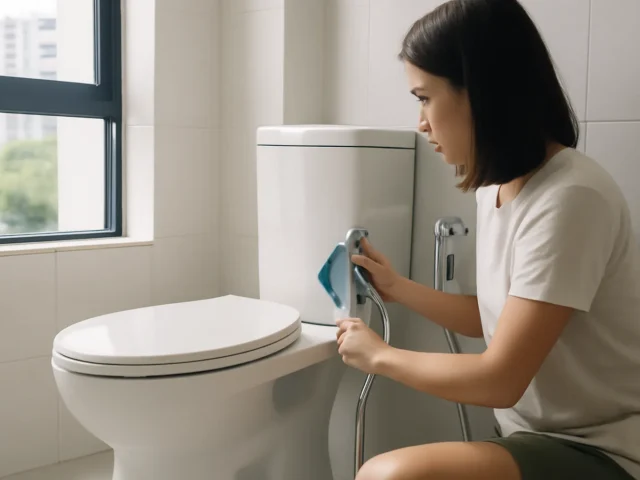
- Bathroom: the flush button or lever, toilet seat, tap handles, the bidet spray handle and the shower mixer.
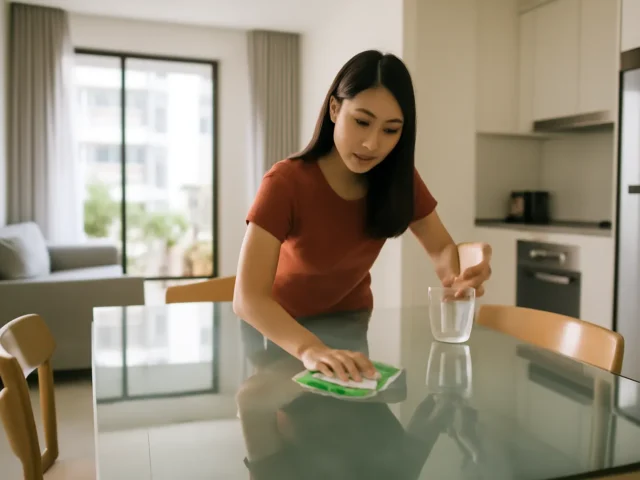
- Living areas: the TV remote, dining table edges, chair backs, sofa armrests and the window handles.
- Personal devices: phones, tablets, laptop keyboards and game controllers.
Think about hands rather than rooms. Anything touched on the way in, after the toilet or before eating belongs on the list. The top of a wardrobe does not.
Choosing a disinfectant that suits the surface
NEA lists several types of household disinfectant. Pick the one that suits the surface, and read the label for dilution, contact time and safe materials.
Household bleach
Bleach is the most widely used option. NEA describes household bleach as a solution of about 5.25% to 6.15% sodium hypochlorite, and for toilets, sinks and floor traps it recommends a dilution of 1 part bleach to 9 parts water. Use cold water, mix only what you need that day, and never use bleach neat on surfaces. Bleach suits ceramic, toilet bowls and white plastic, but it can corrode metal fittings, discolour fabric and strip some finishes, so it is a poor choice for brass handles, wood or anything coloured.
Alcohol-based products
For surfaces bleach would damage, NEA’s guidance points to alcohol-based products with at least 70% alcohol. These evaporate quickly, which makes them useful for handles, switches and remotes, though NEA notes alcohol is less effective against fungi and spores. Keep alcohol well away from open flames and the gas hob, and do not use it on surfaces with a lacquer or acrylic finish without testing first.
Other disinfectants
NEA also lists hydrogen peroxide and quaternary ammonium compounds, common in ready-made sprays and wipes. Follow the label exactly, especially the contact time, which is how long the surface must stay wet for the product to work.
How to disinfect your home step by step
This is the routine we suggest for a whole-flat wipe-down.
- Open the windows. NEA advises ventilating the home during and after cleaning to reduce disinfectant fumes. Switch on a fan if the air is still.
- Put on gloves. Household rubber gloves protect your skin from detergent and bleach. If you are cleaning up after someone with an infectious illness, NEA’s guidance also recommends a mask.
- Prepare two cloths and two bowls. One bowl holds warm water with a little detergent, the other your diluted disinfectant. Colour-code the cloths so the toilet cloth never reaches the kitchen.
- Work from clean to dirty. Start with bedrooms and living areas, then the kitchen, and finish with the bathrooms. This avoids carrying germs from the toilet to the dining table.
- Clean each surface first. Wipe away dust and fingerprints with the detergent cloth, then let it dry or wipe it with a dry cloth.
- Apply the disinfectant to the cloth, not the surface. NEA recommends spraying disinfectant onto a cloth rather than directly onto surfaces. This is especially important near electrical points.
- Leave it for the contact time. Check the label. For diluted bleach on toilets and sinks, NEA specifies 10 minutes before rinsing.
- Rinse where needed. Wipe bleach off metal fittings and food-contact surfaces with a clean damp cloth after the contact time, then dry.
- Wash up. Launder the cloths in hot water, rinse the bowls, take your gloves off carefully and wash your hands with soap.
How to clean door handles and light switches without damage or shocks
These get touched more than anything else in the house, and are easily damaged by an enthusiastic cleaner. Here is how to clean door handles and light switches properly.
Door handles and locks
Check what the handle is made of. Stainless steel and chrome tolerate detergent and alcohol well. Brass, bronze and painted or powder-coated handles can tarnish or peel with bleach, so use detergent followed by a 70% alcohol wipe. Do not miss the underside of a lever, where fingers grip. For a digital lock, follow the maker’s manual and use a cloth that is barely damp, never wet.
Light switches and sockets
Electricity and liquid do not mix. Never touch a switch or socket with wet hands, and keep liquid out of every electrical point. The Energy Market Authority’s electrical safety advice also warns against using cracked or broken power points, which can leak current.
- Make sure your hands and gloves are dry before you start on the switches.
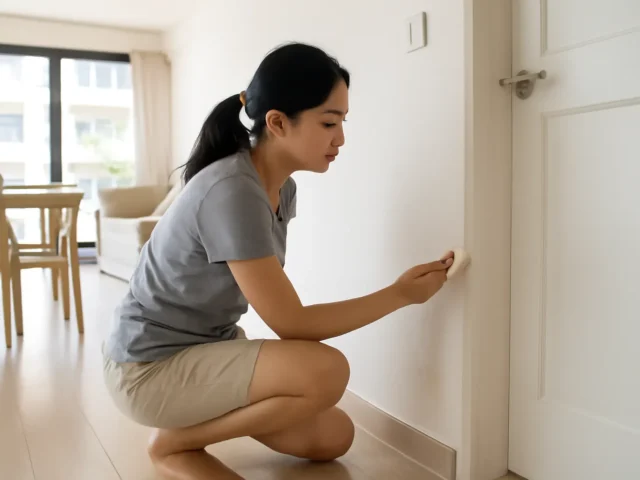
- Never spray anything directly at a switch plate or socket. Spray onto a cloth, then wring it out until it is only just damp.
- Wipe the plate and the rocker, not the gaps around them, so no liquid seeps behind the cover.
- Leave sockets alone apart from a dry dust. Nothing should go into the holes.
- If a switch or socket is cracked, loose, scorched or warm to the touch, stop and have a licensed electrical worker look at it. Cleaning will not fix it.
Remotes, phones and other electronics
Take the batteries out of a remote before cleaning it. Wipe it with a cloth lightly moistened with 70% alcohol, using a cotton bud for the gaps between buttons. For phones, tablets and laptops, follow the manufacturer’s cleaning advice, because some screens have coatings that strong chemicals damage. Our guides on cleaning a keyboard and mouse and cleaning a TV screen go into more detail.
Safety rules that matter more than the disinfectant
Two of the easiest mistakes with household chemicals are combining products and working in a small room with no fresh air. Keep these rules without exception.
- Never mix bleach with ammonia, vinegar, acids or other cleaners, and never combine any two cleaning products, including hydrogen peroxide with vinegar. The combinations can release toxic gases or corrosive mixtures. NEA advises preparing and using each disinfectant according to its own instructions. If you switch products, rinse the surface with water in between.
- Ventilate. Keep a window open and do not work with bleach in a closed bathroom with the door shut.
- Test first. Try a new product on a hidden spot before using it on a handle, table or cabinet you care about.
- Store safely. Keep disinfectants in their original labelled bottles, closed, and out of reach of children. Never decant bleach into a drinks bottle.
- Know when to get help. If someone swallows a cleaning product, splashes it in their eyes or has trouble breathing after inhaling fumes, see a doctor promptly, and call 995 in an emergency.
How often to disinfect, and when to do more
On a normal week, wiping the main high-touch points every few days and cleaning the bathroom weekly is plenty for most households. Our household cleaning schedule shows how to fit that into a daily and weekly routine without it taking over.
Step it up when someone is ill. Disinfect the bathroom they use and the handles and switches on their route through the flat at least once a day, keep their towels separate, and wash their bedding in hot water. NEA’s residential guidance advises cleaning and disinfecting as frequently as possible. For childhood illnesses that spread easily through toys and surfaces, our guide on stopping hand, foot and mouth disease spreading at home covers what else to do. If the person who is ill gets worse, see a doctor.
Handwashing with soap, after the toilet, before meals and on coming home, still does more than any spray.
Related guides: Natural Mosquito Repellent or DEET? What Singapore Families Should Use and How to Get Rid of Moths in Wardrobes and Kitchen Cupboards.
Frequently Asked Questions
Can I use bleach on light switches?
It is better not to. Bleach can yellow plastic switch plates and any liquid that runs behind the cover is an electrical hazard. Clean the switch with a barely damp detergent cloth, then wipe it with a lightly moistened 70% alcohol cloth, making sure your hands are dry and that you never spray directly at the switch.
How should I dilute household bleach for the toilet and sink?
NEA recommends 1 part household bleach to 9 parts water for toilets, sinks and floor traps, using bleach of about 5.25% to 6% sodium hypochlorite. Mix it fresh in cold water, leave it on the surface for 10 minutes, then clean and rinse. Wear gloves, keep a window open and never mix it with any other cleaning product.
Do I need to disinfect my home every day?
Not usually. For a healthy household, regular cleaning plus a disinfectant wipe of the main high-touch points a few times a week is enough. Disinfect daily while someone at home is ill, or if you care for a newborn or a family member with weak immunity.
Is it safe for my helper to use disinfectants?
Yes, provided she has been shown how. Give her gloves, explain which product goes on which surface, write the dilution down, and make it a firm rule that products are never mixed. Our guide to training your maid in simple cleaning routines suggests how to set these habits up from the first week.
Conclusion
Disinfecting a home well is less about strong chemicals and more about method. Clean before you disinfect, focus on the surfaces hands actually touch, choose a product that suits each material, and leave it wet for long enough to work. Treat light switches and sockets with the respect electricity deserves, and never combine cleaning products.
If someone in your family is unwell and you need the whole flat cleaned thoroughly, we can help. Femme5 also offers home cleaning in Singapore by the hour and deep cleaning for kitchens and bathrooms. Message our team for a quote.
The Femme5 Team
Home cleaning team, Femme5 Agency
Femme5 provides part-time home cleaning, deep cleaning and post-renovation cleaning for HDB flats, condominiums and landed homes across Singapore.