Knowing how to clean vomit properly matters more than most families realise. A child is sick on the sofa at 2am, an elderly parent cannot reach the bathroom in time, or a guest has a bad reaction to dinner. The instinct is to wipe it up fast and move on. This guide explains how to clean it up hygienically, how to protect everyone else in the house while you do it, and how to get rid of the smell that tends to linger long after the mess has gone.
The reason for the extra care is simple. Vomit can carry viruses that pass easily from person to person. Singapore’s food safety agency describes norovirus, the common “vomiting bug”, as highly contagious, and notes that vomit and faecal particles from an infected person are likely to be infectious. A quick wipe with a damp cloth can leave enough behind to make the next person ill.
The good news is that the National Environment Agency (NEA) publishes clear cleaning and disinfecting guidance for homes and other premises. We have drawn on it throughout.
Why vomit needs more than a quick wipe
According to the Singapore Food Agency’s page on norovirus, the virus spreads through contact with an infected person, through contaminated food or water, and by touching contaminated surfaces and then putting unwashed fingers in the mouth. It can survive on surfaces such as tabletops, sinks and cutlery for up to two weeks. Symptoms usually appear 12 to 48 hours after infection and last one to three days.
Norovirus is not the only possibility. Hand, foot and mouth disease (HFMD), which circulates among young children in Singapore, can also cause vomiting, and the viruses behind it spread through saliva, faeces and contaminated surfaces. If your child has HFMD, our guide to stopping HFMD spreading at home covers the wider clean-up.
The practical point is that you rarely know the cause at the moment you are cleaning. It is safest to treat every episode of vomiting as potentially infectious and clean accordingly.
What to prepare before you start
NEA’s guidelines for cleaning and disinfecting residences recommend disposable gloves and a face mask, with a change of clothes ready for afterwards. In a home, a practical kit looks like this:
- Disposable gloves, ideally two pairs so you can change halfway.
- A face mask.
- Plenty of paper towels or old disposable rags to absorb the bulk of the mess.
- Two plastic bags, so waste can be double-bagged.
- A bucket of warm water with ordinary detergent.
- Household bleach and a measuring cup, for hard surfaces that can tolerate it.
- Clean cloths, plus a mop and bucket if the floor is affected.
Keep children and other family members out of the room while you work, and open windows to ventilate. NEA advises ventilating during and after cleaning to reduce airborne particles and disinfectant fumes.
Mixing bleach safely
Household bleach is typically 5.25 to 6.15% sodium hypochlorite. NEA’s guidance for disinfecting toilets uses a 0.5% solution, which for bleach of 5.25 to 6.00% strength means 1 part bleach to 9 parts water. Mix it fresh, in a ventilated space, and follow the instructions on your bottle, since strengths vary.
Safety warning: never mix bleach with ammonia, vinegar, acidic toilet cleaners or any other cleaning product. The combination can release toxic gases. Keep the solution well away from children, and wear gloves throughout.
How to clean vomit from hard floors, step by step
Hard floors such as tiles and vinyl are the easiest surfaces to deal with. On marble or other natural stone, skip the bleach step and use a disinfectant labelled safe for stone. This method follows NEA’s sequence of cleaning first, then disinfecting.
- Put on gloves and a mask before you go near the spill.
- Cover and absorb. Lay paper towels over the vomit to soak it up and stop it spreading. Do not sweep it, as sweeping can stir up particles.
- Scoop from the outside in. Gather the soaked towels and solid matter from the edges towards the centre, and place everything straight into a plastic bag.
- Wash the area with detergent and warm water to remove what is left. Disinfectants work poorly on surfaces that are still dirty.
- Disinfect. Soak a cloth in the diluted bleach solution and wipe the area, moving from the cleaner surrounding area towards the dirtiest spot. NEA advises applying disinfectant to a cloth rather than spraying it directly onto the surface.
- Leave it to work. Allow the contact time on your product label. NEA uses 10 minutes for toilet surfaces cleaned with 0.5% bleach.
- Rinse and dry. Wipe again with a clean, wet cloth and let the area air dry.
- Bag the waste. Put the cloths, towels and gloves into the bag, seal it, place it inside a second bag and dispose of it with household rubbish.
- Wash your hands thoroughly with soap and water for at least 20 seconds, then shower and change your clothes if you were splashed.
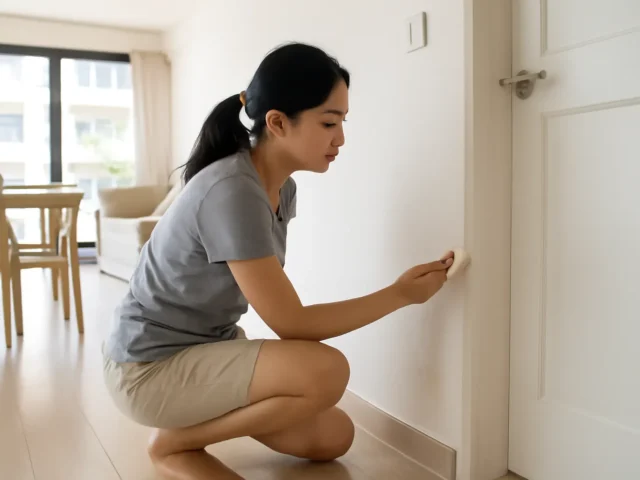
Check the nearby area too. Vomit splashes further than it looks, so wipe skirting boards, furniture legs, door handles and light switches that may have been touched. If you mop, NEA suggests a bucket with a wringer rather than wringing the mop by hand, and not walking or mopping from an area you have not cleaned back into one you have. Our guide on how to mop a floor covers technique in more detail.
Sofas, carpets and mattresses
Soft surfaces are harder because bleach can permanently discolour or damage fabric. Always remove as much of the solid matter as possible first, using paper towels and a blunt scraper, and blot rather than rub, which pushes the liquid deeper into the fibres.
Carpets and rugs
NEA’s guidance is to steam clean carpets, rugs and mats that have been soiled with bodily fluids, and not to hang them up and beat them. If you do not own a steam cleaner, blot with detergent and water, rinse by blotting with clean water, and dry the area quickly with a fan. Our carpet cleaning guide explains drying methods that suit Singapore’s humidity. Foam tiles and baby gyms need gentler care, covered in our guide to cleaning a play mat.
Fabric sofas
Check the care label first. Many fabric sofas carry a code that tells you whether water based cleaning is safe. Remove any washable covers and launder them separately. For fixed upholstery, blot with a mild detergent solution, rinse by blotting, and dry thoroughly. Test any cleaner on a hidden spot before using it on a visible area. Our guide to cleaning a fabric sofa goes through the codes.
Mattresses
Remove and wash all bedding at once. On the mattress itself, blot, clean with a small amount of detergent solution, and avoid soaking the foam, which can trap moisture and grow mould in our climate. Dry it with good airflow, ideally near an open window. Our mattress cleaning guide has more on stains and drying.
Washing soiled clothes and bedding
NEA advises against shaking contaminated linens or clothing, since that can spread particles. Instead:
- Wearing gloves, lift off any solid matter with paper towels and put it in the toilet, then close the lid and flush. Avoid rinsing under a running tap, which can splash.
- Wash the items separately from other laundry in hot water above 60°C with detergent, if the fabric allows it.
- If hot water is not suitable, NEA suggests soaking items in disinfectant and running two wash cycles back to back.
- Dry items completely before they go back in the cupboard.
How to remove vomit smell
If you are wondering how to remove vomit smell, the most common cause is residue that was missed, not the air itself. Before reaching for fragrance, work through these steps:
- Find every spot. Check under cushions, inside crevices, behind the bed frame and along floor grout. A torch held low to the floor helps you spot dried splashes.
- Clean again where needed. Repeat the detergent and rinse on any area that still smells.
- Use baking soda on fabrics. Once the area is clean and completely dry, sprinkle baking soda over carpet or upholstery, leave it for several hours, then vacuum. It absorbs odour without harsh chemicals.
- Ventilate. Open windows and run a fan. Singapore’s humidity slows drying, and damp fabric holds smells.
- Wash the tools. NEA recommends disinfecting reusable cloths, mops and buckets after each use and letting them air dry. A mop that was put away damp will spread the smell around the house.
Protecting the rest of the household
Cleaning is only part of the job. The person who was sick may still be infectious, and the people looking after them are at the greatest risk. The Singapore Food Agency advises frequent handwashing with soap and water, especially after using the toilet, handling food or changing diapers. It also advises that people who are unwell should not prepare food or care for others, and should not share food, drinks or utensils. Whoever is caring for a sick family member should wash their hands thoroughly before touching food.
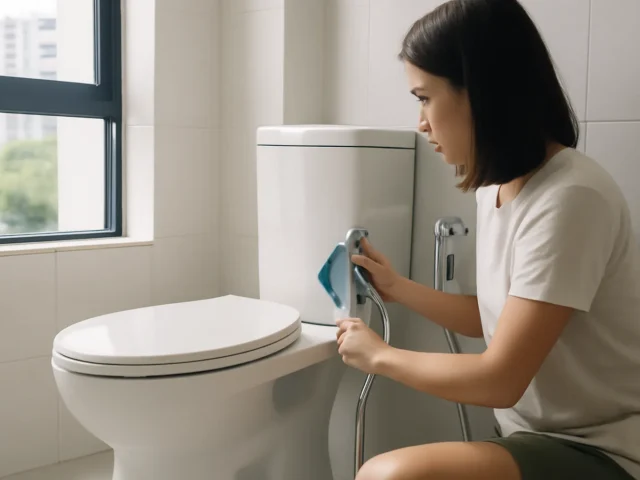
Focus extra cleaning on the toilet and bathroom the sick person uses, and on high touch surfaces such as door handles, taps, switches and the flush button, as NEA suggests. Similar routines help contain other childhood bugs, such as threadworms in children.
Health note: vomiting can lead to dehydration, particularly in young children, the elderly and people with chronic illness. Encourage small, frequent sips of fluid and see a doctor if vomiting continues, if you see signs of dehydration, or if you are worried. In an emergency, call 995.
Related guides: How to Remove Static Cling From Clothes in Air-Conditioned Homes and How to Clean a Phone and Phone Case Safely.
Frequently Asked Questions
Can I use bleach to clean vomit on every surface?
No. Diluted bleach suits hard, non porous surfaces such as tiles and sealed floors, but it can discolour or damage fabric, wood, natural stone and some metals. On soft furnishings, clean with detergent and water instead, steam clean carpets where possible, and always test on a hidden spot first.
How long should I leave the disinfectant on the surface?
Follow the contact time on your product’s label. For a 0.5% bleach solution on toilet surfaces, NEA’s residential guidelines use a contact time of 10 minutes, after which you wipe with a clean wet cloth and let the area air dry.
Is it safe for children to help clean up?
It is best to keep children out of the room entirely. Vomit may carry infectious viruses, and bleach solutions are hazardous to young skin and eyes. An adult wearing gloves and a mask should handle the clean-up and wash their hands thoroughly afterwards.
Why does the smell come back after cleaning?
A returning smell usually means some residue was missed, often in crevices, under cushions or deep in fabric, or that the area stayed damp. Search the area again, clean any missed spots, dry everything thoroughly with good ventilation, and use baking soda on dry fabrics before vacuuming.
When should someone who has been vomiting see a doctor?
See a doctor if the vomiting does not settle, if the person cannot keep fluids down, shows signs of dehydration, is very young, elderly or has a chronic illness, or if you are concerned for any reason. Call 995 in an emergency.
Conclusion
Cleaning up vomit well comes down to a few habits: protect yourself first, remove the bulk without spreading it, clean before you disinfect, use bleach only where it is safe, and dry everything thoroughly. Treating every episode as potentially infectious keeps the rest of the household well, and finding every last trace is what finally clears the smell.
Keep a small kit of gloves, masks, paper towels and bags in a cupboard so you are not hunting for supplies in the middle of the night.
Once the immediate mess is dealt with, a thorough clean of the room can help the home feel fresh again. When you need an extra pair of hands, see our part-time home cleaning or deep cleaning options, or talk to the Femme5 team for a quote.
The Femme5 Team
Home cleaning team, Femme5 Agency
Femme5 provides part-time home cleaning, deep cleaning and post-renovation cleaning for HDB flats, condominiums and landed homes across Singapore.