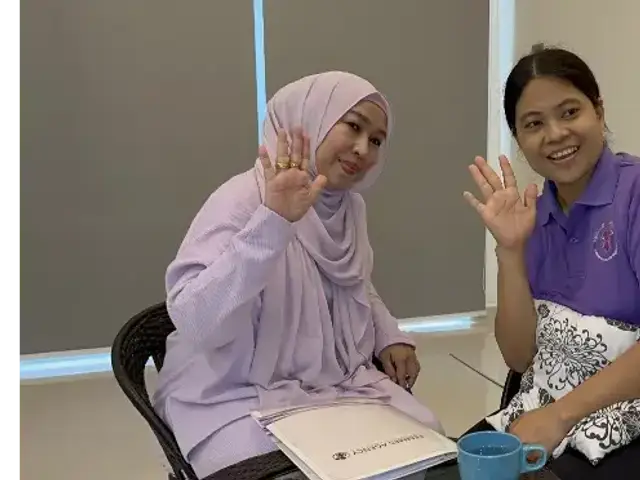
Helper mental health rarely comes up at the interview, yet it shapes almost everything about how a placement goes. Your helper lives far from her family, in someone else’s home, often in a new language, with work that never quite leaves the building. Most helpers cope well, but some struggle, and the signs can be easy to miss or misread as attitude. This guide explains what to look out for, how to respond supportively, and which official helplines and services exist in Singapore.
We are a maid agency, not a medical service, so nothing here replaces a doctor’s assessment. What we can offer is a practical view of what employers can do from inside the home, and where the line sits between support you can give and help that needs a professional.
If your helper ever talks about harming herself, or you believe she is in immediate danger, call 995 for an ambulance or 999 for the police straight away. Do not wait to see if it passes.
Why helper mental health deserves attention
The Ministry of Manpower (MOM) is clear that employers carry part of this responsibility. In a 2024 reply on the well-being of migrant domestic workers, MOM stated that “employers play an important role in supporting the well-being of their MDWs”, and pointed to sufficient daily rest, weekly rest days and the mandatory monthly rest day that lets helpers recharge and build support networks outside the household.
The pressures are real and often stacked together:
- Separation from family, sometimes including her own young children.
- Financial pressure, such as supporting relatives or repaying a placement loan.
- Isolation, especially for a helper who rarely leaves the flat or has few friends in Singapore.
- Adjustment to high-rise living, unfamiliar appliances, different childcare practices and a new language, which MOM’s own rest days and well-being guidance flags as common challenges for new helpers.
- Workload and sleep, particularly in homes with a newborn or an elderly family member who needs care at night.
- News from home, such as illness, a death or a family crisis she cannot be present for.
Signs your helper may be struggling
Everyone has a bad week. What matters is change from her usual self, and whether it persists. HealthHub’s guidance on how to identify and deal with depression describes a prolonged low mood that disrupts daily life as a warning sign, alongside loss of interest, changes in sleep or appetite, fatigue and feelings of guilt.
In a household setting, that can look like:
- She has become withdrawn, quiet or tearful, when she used to chat with the family.
- She stops going out on her rest day, or stops calling home, without a clear reason.
- She is eating noticeably less or more, or seems exhausted even after rest.
- She becomes forgetful or makes unusual mistakes in tasks she used to handle easily.
- She seems jumpy, irritable or anxious, or complains often of headaches or stomach aches.
- She says things like “I am a burden”, “there is no point” or talks about not wanting to be here.
The last point is the most serious. Any talk of death or self-harm needs a same-day response, not a wait-and-see approach.
Be careful not to jump to conclusions either. A drop in work quality can also come from unclear instructions, a physical illness or a conflict that has not been raised. Our guide to handling conflicts with your maid covers how to separate those threads calmly.
How to start the conversation
Many helpers will not raise problems with an employer, out of worry about losing the job or simply out of politeness. You may need to open the door.
- Pick a calm, private moment. Not in front of the children, not in the middle of a task, and not when you are frustrated about something else.
- Lead with what you have noticed, not a judgement. “You have seemed tired and quiet this week. Is everything all right?” works better than “Your work has slipped.”
- Listen more than you speak. Let her finish. If language is a barrier, keep sentences short and check understanding gently.
- Reassure her that asking for help is safe. Make it clear that raising a problem will not count against her.
- Agree one or two practical next steps, and check in again in a few days.
Our article on communicating with a helper from a different culture has more on how indirect communication styles can mask a problem.
Practical ways to ease helper stress at home
Much of what reduces helper stress sits within the employer’s control. None of it is complicated.
Protect rest, properly
Make sure she gets her weekly rest day and that at least one rest day a month is genuinely taken, as MOM requires. Protect her daily rest too: a reasonable bedtime, uninterrupted meals, and no calls for small things late at night. If your household has overnight caregiving needs, plan how the night load is shared rather than leaving it all with her.
Keep her connected
MOM suggests employers help helpers stay in touch with family to ease homesickness and loneliness. Regular access to her phone, a reliable Wi-Fi connection and privacy for calls make a real difference. MOM’s guidance treats her phone as her personal property. If you need to set expectations around phone use during work, our guide to fair phone rules sets out a balanced approach.
Encourage a life outside the home
Friends, a faith community or a weekend course give her people to talk to who are not her employer. MOM’s resources page for employers mentions groups such as Aidha, which runs money management courses. Our helper day off ideas guide has more suggestions.
Make the workload realistic
Look honestly at what you are asking. A helper caring for a newborn, cooking for six and cleaning a large home may simply have too much. Reprioritising, simplifying routines, or bringing in occasional part-time cleaning can lift a lot of pressure.
Show that she is valued
Specific thanks, fair treatment and attention to the dates that matter to her all help. See our guide to appreciating your helper for ideas.
Helplines and official support in Singapore
These are the official and established channels we have verified. It is worth saving them in your phone and making sure your helper has them too.
- Emergencies: call 995 for an ambulance if she is unwell or has harmed herself, or 999 for the police if anyone is in danger.
- Centre for Domestic Employees (CDE): 1800 225 5233. MOM describes this as a hotline that offers advice and support in helpers’ native languages, and MOM’s resources page for MDW employers lists it for employment-related advice and assistance.
- MOM MDW Helpline: 1800 339 5505, Monday to Friday, 8.30am to 5.30pm. MOM’s FAQ for helpers in distress says this line is strictly for MDWs in distress, so it is one for your helper to call herself.
- Samaritans of Singapore (SOS): 1767, a 24-hour hotline for anyone in crisis or having thoughts of suicide, with a 24-hour CareText service on WhatsApp at 9151 1767. Details are on the SOS website.
- National mindline 1771: launched by the Ministry of Health in June 2025 as a round-the-clock mental health helpline, reachable by phone at 1771, WhatsApp at 6669 1771 or webchat, according to MOH’s announcement.
A helper may feel more comfortable speaking to someone outside the household. Offering her these numbers without asking what she discusses is a sign of trust.
Support built into the system
MOM’s 2024 reply also explains the support that already exists. First-time helpers attend the Settling-in Programme, where they learn about managing stress and seeking help. Licensed employment agencies must check that helpers are settling in well within three months of placement, and MOM partners CDE to interview helpers twice in their first year. If you placed your helper through an agency, it is reasonable to call them early if you are worried.
When to involve a doctor
HealthHub’s guidance on stress lists seeking professional help among the ways to cope. In practice, take her to a doctor if low mood, poor sleep or anxiety last more than a couple of weeks, if she cannot function day to day, or if physical symptoms appear without an obvious cause. As her employer, you are responsible for her medical costs under MOM’s rules, so cost should never be the reason she goes without care.
Go with her if she wants you to, but respect her privacy if she prefers to see the doctor alone. If the doctor recommends rest or follow-up, make room for it. Anything urgent, including any risk of self-harm, means calling 995 rather than booking an appointment.
Related guides: Hiring a Maid in Singapore: A First-Time Employer's Guide and Benefits of Hiring a Maid Through an Agency: Singapore 2026.
Frequently Asked Questions
How do I know if my helper is depressed or just tired?
Tiredness usually improves with rest, while a low mood that persists and disrupts daily life, together with changes in sleep, appetite, interest or energy, is a reason to talk to her and arrange a doctor’s visit.
Who can my helper call if she needs to talk to someone?
She can call the Centre for Domestic Employees on 1800 225 5233 for support in her native language, Samaritans of Singapore on 1767 at any hour, or the MOM MDW Helpline on 1800 339 5505 on weekdays.
Do I have to pay for my helper’s mental health treatment?
MOM makes employers responsible for their helper’s medical costs, so you should pay for a doctor’s consultation and treatment, and check her medical insurance for inpatient care.
Should I ask my helper to work fewer hours if she is struggling?
Easing her workload for a while, protecting her sleep and making sure she takes her rest days can help a great deal, and is often a sensible first step alongside a conversation and, where needed, a doctor’s advice.
What should I do if my helper talks about hurting herself?
Treat it as urgent: stay with her, do not leave her alone, and call 995 for an ambulance, or Samaritans of Singapore on 1767 for immediate guidance.
Conclusion
Supporting your helper’s mental health is not about becoming her counsellor. It is about noticing change, opening the door to a conversation, protecting her rest and connections, and knowing when to bring in a doctor or a helpline. Those steps are within every employer’s reach, and they make a difference.
Keep the helpline numbers handy, check in regularly rather than only when something goes wrong, and remember that a helper who feels safe raising problems is far less likely to reach a crisis.
If you are worried about how your helper is settling in, it helps to talk it through early. You can get in touch with the Femme5 team to discuss your family’s needs, read more about how we work with employers, or explore what a good placement looks like.
The Femme5 Team
Maid placement specialists, Femme5 Maid Agency
Our consultants work with Singaporean and expatriate families on helper matching, contracts and MOM compliance, and we verify the regulatory guidance in our articles directly against the Ministry of Manpower’s published requirements.