When smoke haze drifts over the island, most families do the same thing first: open an app and check the air quality PSI. This guide explains how to read the PSI and the 1-hour PM2.5 bands that the National Environment Agency (NEA) publishes, what official guidance says about keeping indoor air cleaner, and how to look after the people in your home who are most affected: babies, older relatives and anyone with asthma or a heart or lung condition.
We are not a clinic, so the health guidance here comes from NEA, the Ministry of Health (MOH) and HealthHub, linked so you can check the current advice.
What we can add is the household side. During haze, Singapore homes run differently for a week or more: windows stay shut, laundry has to come indoors, dust settles on every ledge, and errands and school runs need a little more thought.
What the air quality PSI and PM2.5 readings measure
NEA’s air monitoring network measures six pollutants: sulphur dioxide, nitrogen dioxide, ozone, carbon monoxide, and fine particles in two sizes, PM10 and PM2.5. According to NEA’s page on air pollution control, these are used to compute the Pollutant Standards Index over a rolling 24-hour period. Readings are reported hourly on the NEA website, the haze.gov.sg microsite and the myENV app, broken down into north, south, east, west and central regions.
Because the PSI is a 24-hour average, it changes slowly. For current conditions, NEA also publishes the 1-hour PM2.5 concentration, in micrograms per cubic metre.
The 24-hour PSI bands
- 0 to 50: Good.
- 51 to 100: Moderate.
- 101 to 200: Unhealthy.
- 201 to 300: Very unhealthy.
- Above 300: Hazardous.
The 1-hour PM2.5 bands
- Band 1, Normal: 0 to 55.
- Band 2, Elevated: 56 to 150.
- Band 3, High: 151 to 250.
- Band 4, Very High: 251 and above.
MOH and HealthHub advise using the 1-hour PM2.5 reading to decide on activities in the next hour or so, and the 24-hour PSI forecast to plan the next day.
Reading the NEA and MOH haze health advisory
The advisory is not one instruction for everybody. MOH’s haze page sets out different advice for three groups, based on the 24-hour PSI forecast.
- Healthy adults: normal activities up to 100. At 101 to 200, reduce prolonged or strenuous outdoor exertion. At 201 to 300, avoid it. Above 300, minimise outdoor activity.
- The elderly, pregnant women and children: normal activities up to 100. At 101 to 200, minimise prolonged or strenuous outdoor exertion. At 201 to 300, minimise outdoor activity. Above 300, avoid outdoor activity.
- People with chronic lung or heart disease: normal activities up to 100. At 101 to 200, avoid prolonged or strenuous outdoor exertion. Above 200, avoid outdoor activity.
HealthHub explains that “prolonged” means continuous exposure for several hours.
For the next hour, MOH’s advice tracks the PM2.5 band. In Band 2, reduce strenuous outdoor activity, and vulnerable people should avoid it. In Band 3, avoid strenuous outdoor activity, and vulnerable people should avoid all outdoor activity. In Band 4, healthy people should minimise all outdoor activity, and vulnerable people should avoid it.
Keeping indoor air cleaner when the haze arrives
Most of us spend the bulk of a hazy week indoors, so this is where a household can make the biggest difference. The official tips from HealthHub’s guide to protecting yourself against the haze come down to a few steps.
- Close doors and windows when the outdoor air is getting worse. Reopen them once the readings improve, so the flat does not become stuffy for longer than it needs to.
- Check how your air-conditioner gets its air. If a unit draws unfiltered air from outside, as window units do, HealthHub advises closing the outdoor air intake. If unsure, check your unit’s manual.
- Keep indoor sources of smoke out. HealthHub specifically names smoking. Anything burning indoors adds particles to air you have just sealed in.
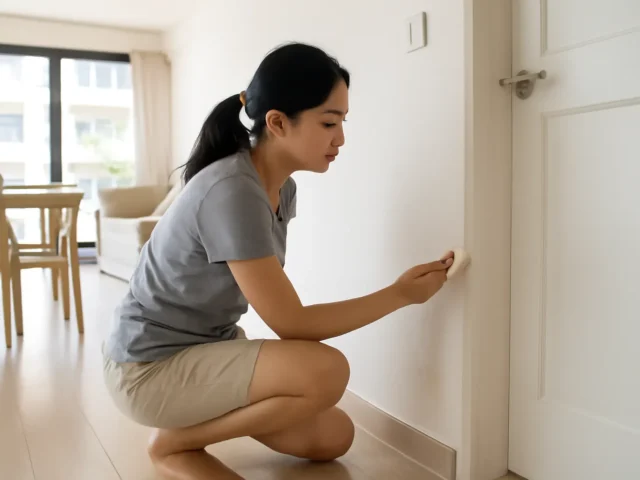
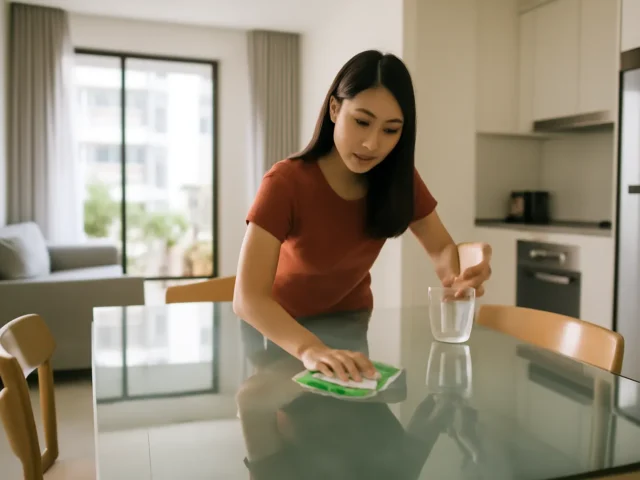
- Clean with damp cloths and a mop, not a broom or duster. HealthHub notes that wet cleaning, such as mopping or wiping, generally does not raise dust the way dry dusting or vacuuming does.
- Consider a portable air cleaner for the room that matters most. HealthHub says these can further reduce indoor particle levels. We cover how to choose one below.
A sealed flat soon feels close in our humidity, so run a fan or the air-conditioner in the rooms you use. If you are weighing up machines, our guide to dehumidifiers versus air purifiers explains which does what.
Cleaning up haze dust safely at home
Even with windows shut, fine dust settles on sills, grilles, fan blades and floors. The wrong method simply sends it back into the air.
- Start high and work down. Fan blades, shelves and ledges first, the floor last.
- Use a damp, well-wrung cloth. A microfibre cloth holds fine dust well when slightly damp.
- Mop rather than sweep. Change the water when it turns grey.
- Wash cloths and mop heads after each session rather than shaking them out.
- Bring laundry in. Clothes hung outside during haze come back smelling of smoke, so dry them indoors near a fan until readings fall.
Plain water or a mild, diluted household detergent is enough for haze dust. Keep the usual safety rules in mind: never mix bleach with ammonia-based or acidic cleaners, test any product on a hidden spot first, and with the windows closed, avoid strong-smelling sprays altogether, since there is nowhere for fumes to go.
Air-conditioner filters trap a share of the dust too, so check them once the haze passes. Our step-by-step guide to cleaning an aircon filter covers the parts a household can safely do. Servicing inside the unit is a job for a licensed aircon technician, which is not a service we provide.
Protecting babies, the elderly and people with asthma
This section summarises official guidance only. It does not replace advice from your own doctor, and if anyone in your home seems unwell, please see a doctor. For an emergency, such as severe difficulty breathing, call 995.
Babies and newborns
Doctors at KK Women’s and Children’s Hospital give clear advice in SingHealth’s guide to haze and young children:
- Never put a mask on a baby, indoors or outdoors.
- Do not drape curtains or covers around the cot. They do not block fine particles and can make a baby overheat.
- An air-conditioned room is fine all day, as long as the thermostat is at 22 to 24°C rather than 18 to 19°C.
- Avoid air purifiers that produce ozone, which can be harmful to infants.
- Take extra care with high-risk babies: premature babies, babies with congenital heart disease, and babies who needed prolonged oxygen or breathing support or are on home oxygen.
The same guide says a worsening cough or breathing difficulty should be checked by a paediatrician early, rather than put down to the haze.
Elderly family members
Older relatives fall into the group that MOH advises to minimise prolonged outdoor exertion once the PSI passes 100. That may mean moving a daily walk indoors or rescheduling a non-urgent outing. Anyone with a chronic heart or lung condition should keep their medicines close at hand, as MOH advises. HealthHub also notes that symptoms can appear one to three days after exposure, so keep watching for a few days after the haze clears. If you have a helper caring for a parent, walk her through these points, as she is often the first to notice a change. Our elderly caregiver placements page explains how we prepare helpers for this kind of care.
Children and adults with asthma
HealthHub lists air pollution, including haze, among common asthma triggers. Its practical steps for parents of children with asthma advise keeping windows closed during haze, limiting time outdoors, giving preventer or reliever medication as prescribed, and following the asthma action plan agreed with the child’s doctor. For what to do if symptoms suddenly worsen, see our guide on what to do during a child’s asthma attack.
Choosing a portable air cleaner
NEA’s guidance on portable air cleaners focuses on one figure: the Clean Air Delivery Rate, or CADR, which describes how much clean air a device can deliver to a room. A higher CADR means more cleaning capacity. NEA suggests comparing the CADR against the size of the room you plan to use it in, and asking the supplier for detailed product information. NEA also publishes a reference list of air cleaners based on supplier data.
Put it in the room where people spend the most time, usually a bedroom at night, keep that room closed while it runs, and change filters on the maker’s schedule. With a baby at home, avoid ozone-producing models, as KKH advises.
Running the household during a hazy week
- Check the readings at set times. Look at the 1-hour PM2.5 before school runs and errands, and at the 24-hour PSI forecast the evening before.
- Brief your helper. She breathes the same air as the rest of the family. Show her where to find the readings and plan errands for hours when readings are lower. Her rest day remains hers to spend as she chooses, but sharing the advisory helps her make her own plans.
- Know the Haze Subsidy Scheme. When MOH activates it, the Haze Subsidy Scheme helps eligible Singapore citizens, including children aged 18 and below and seniors aged 65 and above, with haze-related conditions such as asthma, at polyclinics and participating Public Health Preparedness Clinics. MOH announces when it is activated.
Related guides: How to Clean a Dishwasher: Filter, Spray Arms, Seals and Smells and How to Clean a Whiteboard: Ghosting, Permanent Marker and Kids' Boards.
Frequently Asked Questions
What is a safe PSI level in Singapore?
A 24-hour PSI of 0 to 100 is in the Good or Moderate range, and MOH advises that everyone, including the elderly, children, pregnant women and people with chronic lung or heart disease, can carry on with normal activities. Above 100 the air is classed as Unhealthy, and each group is advised to cut down outdoor exertion to a different degree.
Do I need to wear an N95 mask at home during the haze?
No. MOH says N95 masks are not needed indoors or for short commutes. They are meant for longer periods outdoors when readings are high, and elderly people, pregnant women and those with serious heart or lung conditions should ask their doctor before using one. Babies should never wear a mask.
Is it safe to keep a baby in an air-conditioned room all day during the haze?
According to KKH doctors, yes, provided the thermostat is set at 22 to 24°C rather than 18 to 19°C. See a doctor early if your baby develops a worsening cough or breathing difficulty.
How should I clean haze dust off surfaces?
Use wet cleaning. Wipe surfaces with a damp cloth from high to low, mop the floor last, and wash cloths and mop heads afterwards rather than shaking them out. HealthHub notes that mopping and wiping generally do not raise dust the way dry dusting or vacuuming does.
Conclusion
The PSI is most useful when you match it to the right person and the right decision. Check the 1-hour PM2.5 for what you do next, the 24-hour forecast for tomorrow, and the advice for your most vulnerable family member rather than for the healthiest one. At home, close up when the air worsens, clean with water rather than a broom, and keep smoke sources out. Watch vulnerable family members for a few days after the haze clears, and see a doctor if something seems wrong.
Once the skies clear, the settled dust is worth a proper clean. Femme5 also offers home cleaning in Singapore by the hour and deep cleaning for kitchens and bathrooms. Message our team for a quote.
The Femme5 Team
Home cleaning team, Femme5 Agency
Femme5 provides part-time home cleaning, deep cleaning and post-renovation cleaning for HDB flats, condominiums and landed homes across Singapore.